Last time I wrote, I thought about repeated elements in my stories. I found I often included a "churchy" character who was not really saved, just going through the motions. My heart aches for people like that.
This month I started thinking about some other main points or themes in my stories. Only one is published -- the others are in progress. Or under the bed!
I kept coming back to the authority of Scripture and was surprised to find it's a cornerstone of my stories.
As I was doing research about the Quakers in Indiana I discovered there was a major church split, "The Great Separation" in the 1830s throughout the Society of Friends. Some groups firmly believed in the Scripture above all, but others believed personal revelation was just as important.
A story I'm working on now includes a scene where a Friend tries to explain the controversy to a neighbor, who is surprised that such a question about Scripture would even come up.
In another WIP, a young Civil War widow is troubled as her mother-in-law embraces Spiritualism -- the New Age movement of the Victorian era. The mother-in-law is grieving the loss of her only son and feels there are better answers outside the Bible than in it. The daughter-in-law is troubled because she never questioned Scripture before. But Spiritualism sounds so modern and scientific. What if there is something to it? All this complicates her new romance with a cavalry officer.
In a contemporary one that I'm working on, a young woman who is a new Christian moves home with her parents to help them start an artists' commune. Her parents are post-modernists who believe all truths are equal and valid until she starts to date a conservative Christian farmer.
In all the stories the happy endings include most of the characters agreeing on the authority of Scripture.To me Scripture is like a light house shining through a fog of relativism and decisions based on emotion. The Bible is my anchor and that's one thing I want to pass on to my children as well as readers.

Showing posts with label Bible. Show all posts
Showing posts with label Bible. Show all posts
Friday, June 15, 2012

Friday, March 23, 2012
Theology 101 For Novelists: How :"Boring" and "Divisive" Doctrine Can Make Your Story More Interesting
Angelology and eschatology can produce a best seller, but a study on harmatiology can create a deep and thrilling novel.
No, I'm not cursing at you and I'm not speaking in tongues either. And no, you don't need to grab your dictionary – I have some long words you may not be familiar with, but I'll define them.
Raise your hands if you think theology is something that can enhance your novel. I see one hand. Wait, that's my hand I see!
Some may think theology is boring. It can be but not if it's taught right. Others will say that theology is divisive. Technically, it's the differences in theology that divides.
Let me surprise you. All of you have a theology. In fact, if you're a Christian you have a belief in the ten major fields of theology and if you're not you still have views in the vast majority. You may not have it written out with notes indicating the Scriptures you appeal to for that belief or even be aware of it, but you still have a theology.
Is that enough of a shocker? Let me go a step further: Each of your characters has a theology in the ten fields I'll introduce you to. The characters might have varying theologies and these might bring about the conflict.
As I said, theology in and of itself isn't divisive. We may disagree on some of the aspects of these ten fields, but I'm sure we agree about that we have beliefs that fit in these categories. I'll be sharing these theological divisions in the order that my college curriculum covered them.
BIBLIOLOGY: Doctrine of Scripture. Is it inspired? How was it inspired? Does it contain errors?
THEOLOGY PROPER: Doctrine of God. What are His attributes? Is the Trinity fact or fiction?
CHRISTOLOGY: Doctrine of Christ. (That was a tough one to figure out, wasn't it?!) Is Jesus Christ God in the flesh? If so, was he fully God and fully man? Was He sinless and could He have fallen into temptation?
PNUEMATOLOGY: Doctrine of the Holy Spirit. What is the nature of the baptism, indwelling, and filling of the Spirit? Spiritual gifts falls into this category as well.
ANTHROPOLOGY: Doctrine of man. A term not limited to Christianity. Was man created in God's image? What was the nature of the fall?
HARMATIOLOGY: Doctrine of sin. What is sin and how does it affect our relationship with God and with each other?
ANGELOLOGY: Doctrine of angels. (Another one that you wouldn't have guessed without help, right?!) What is the nature of angels? This field also deals with Satan and demons. Frank Peretti's Darkness series deals with this field.
SOTEROLOGY: Doctrine of salvation. Are we saved by grace alone, by our good deeds, or some combination? Are we elect or do we have free will? Can we lose our salvation?
ECCLESIOLOGY: Doctrine of the church. What is the nature and authority of the church? Is the local church autonomous?
ESCHATOLOGY: Doctrine of last things. Is there a coming, thousand-year long Kingdom? If so, will Christ return to set it up or will the church establish it with Christ coming to claim it? Is there a coming time of testing? Will the church be there for all of it, none of it, or part of it? By the way, has anyone heard of a series which started with the book Left Behind?
As I have on my tagline, who says theology can't be thrilling? Hopefully, you no longer see theology as boring or a field that distracts from the action. And maybe you don't see it as much divisive as a great source for page turning conflict.
By the way, I am an ordained minister. I've graduated from Southwestern Conservative Baptist Bible College (now known as Arizona Christian University) in Phoenix, Arizona.
Sunday, August 29, 2010
One True Book
Do you prefer reading fiction or nonfiction?
Me? I like to read both. I just finished reading two novels by David Bunn and Jeanette Oke set in first-century Jerusalem (The Centurion's Wife and its sequel The Hidden Flame). I enjoyed both because they snatched me out of this century and plopped me down in the dusty streets of Zion shortly after the crucifixion. Among the pages I met the Centurion whose servant the Savior healed, the Apostle Peter, deacon Stephen, Martha, Mary, Pontius Pilate, Caiaphas, Herod, and many others. I learned so much.
From those who claim to prefer nonfiction I hear, "Why would you waste your time on a story? How can you say you learned a lot, when those are made-up tales, born from writers with vivid imaginations? Give me the truth."
The coin has two sides.
Children often come up to me after I've told a far-flung tale and say, "Was that story true?"
"There's truth in every one of my stories," I tell them. "It's up to you to find it."
There is truth in every good work of fiction, including fantasy, sci-fi, and other speculative works. Can you almost predict what a particular character will say or do in a given situation because you've known someone like that? The author probably patterned that character after a real person or a composite of real people. That's truth. Have you read something in a historical novel that sent you searching to see if it was as the author described, only to find out that, indeed, the author was right? That's truth. For science fiction to be believable, the author must know the science reality, the physical laws involved. That's truth.
On the other side of the coin is nonfiction. All truth. Nothing but the facts. Right?
During my nine years with two small newspapers, I was a reporter and a feature writer. There is a difference. When I was in reporter mode, I tried to be objective, telling what I observed and heard without emotion or bias.
I could be more subjective as a feature writer. I took it as a compliment when readers would say, "Your features read like fiction." We call it creative non-fiction now.
Despite my efforts to be factual, truthful, and honest, there was error in every piece I wrote. Perhaps I didn't get the quotation perfect. Maybe the interviewee was wrong. Possibly my background research was faulty. Suddenly nonfiction becomes fiction.
The nonfiction section of libraries and bookstores is large, taking up more floor space than the fiction stacks. But it's a lie. Actually, it's all fiction.
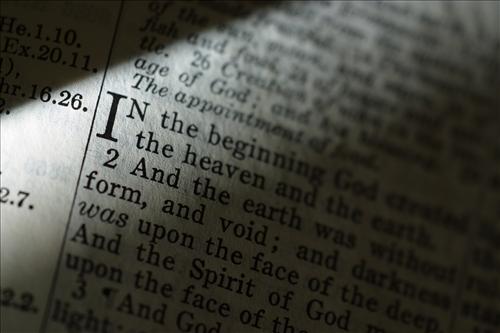
Except for one true book: the Holy Bible. The Author has perfect memory and perfect integrity. Since He cannot lie, every word is true.
Subscribe to:
Posts (Atom)