"Hoosier Ink" Blog

Wednesday, October 27, 2021

Resources for a Writer's Toolbox

 I blame auto correct.

I know it’s super handy when a typo instantly transforms into a correctly spelled word. Especially when it’s a confusing word like occasion. Two Cs or two Ss? I’m forever forgetting. But once I realized that auto correct knew how to spell occasion, I stopped worrying about the C and the S.

But then, it seemed my memory lapsed when it came to other words, too. Words admittedly not as complicated as occasion. In my defense, these words that refused to materialize automatically from my finger taps across the keyboard tended to be letter groupings that I didn’t often use.

Until one day, a most common word refused to appear. For the life of me, I could not remember how to spell . . . Well, the exact word escapes me just now, but trust me, it was not that obscure, and the incident left me thoroughly shaken.

You see, from the sixth grade through high school, teachers called upon me to grade English tests, read essays, and yes, to score spelling tests. Now suddenly, my spelling skills had fallen into question.

And I blamed auto correct. Until the next time I wavered over occasion with those blasted Cs and Ss.

While I’m not ready to let auto correct off the hook completely, I’ve come to terms with the reality that my spelling prowess is not what it used to be. Thank goodness for the ease with which words can be looked up online—if auto correct doesn’t have the capability of instantly rearranging and/or supplying the correct letters. 

Can one admit that auto correct is a useful gadget in a writer’s toolbox while continuing to jab it for eroding one’s natural spelling ability? (Asking for a friend . . . )

Photo by hannah grace on Unsplash

As writers, we need all the instruments and devices an expanded toolbox can hold. Next month I’ll share some of my favorite sources of writerly information, each one a valuable tool. But right now, I want to dish on the upcoming opportunity for Indiana ACFW members to gain a bevy of useful info about the wonderful world of editing. The absolutely-without-a-doubt crucially necessary tool that some fear, others love, and about which a third group finds themselves suspended in a sort of love/hate relationship.  

Join your fellow Hoosier writers on Saturday, November 6, via Zoom from noon to 2 p.m., to discuss the uber important topic of editing.  

Editor Panel: Types of Edits – 

What Are the Differences?

with guests

´  Tish Martin – Content Development 

´  Jean Kavich Bloom – Line editing

´  Kim Autrey – Copy editing/Proofreading 

´   Jessica Brodie – Working with a Writing Coach


Jot down your editing / coaching questions and RSVP to acfwindianachapter@gmail.com, so we'll know you're coming. See you on November 6th! 
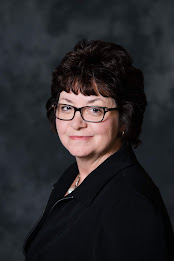
Beth’s combined experiences teaching the high school Sunday School class, substitute teaching in the public school, and connecting with the teenage staff at the fast-food joint where she claimed a “back booth office” helped inspire her young adult “Choices Matter” fiction series. She's a "cheerleader" for saving sex for marriage and for "renewed waiting" because it's never too late to make wiser choices. Her “Waiting Matters … Because YOU Matter” blog helps people of all ages navigate the choppy waters of saving sex for marriage while her “Slices of Real Life” posts find GOD in the day-to-day moments of real life.

 As a genetic genealogy enthusiast, she writes and speaks about her experiences as a "foundling" who located her birth parents. Her journey to find and connect with her biological family is chronicled in the blog series “A Doorstep Baby’s Search for Answers.” All of her writing endeavors can be found on her website, https://bethsteury.com


Tuesday, October 19, 2021

One-on-One Accountability

You’re a writer. You need to invest in yourself. We’ve been through details of self-identification and committing time and money to the craft over the past couple of months.

Now, we need to talk about holding yourself accountable to someone else. This overlaps somewhat with critique groups and with monetary expenditures, whether they be paying for a conference or a course.

You have several options in accountability to others.

1.  You can find an official accountability partner

This could be another writer, a friend, a spouse, or a family member. Unlike a critique partner where you send work as it happens to be ready for a review, your accountability partner is expecting work on an assigned basis. The two of you agree ahead of time what you will send and when. It’s your job to make sure you keep your word. Very helpful for getting words on the page, reminding you once again you ARE a writer! You can also connect daily via phone, text, or email just to report in on what got done that day.

2.  Similar to an accountability partner, simply add an accountability component to your critique group. 

Currently, I participate in three critique groups. Here’s how each of them work, but only one is also an accountability group.

            A. My weekly group chooses two writers to send in their work for critique. So, only two of eight people are accountable for their writing that week. The rest are accountable to read and critique the two submissions.

            B. My monthly group will critique any work that happens to be sent in. There’s no accountability other than to read and critique what’s submitted. This is my least favorite format because some evenings we have one item to evaluate; other evenings there have been as many as eight. That’s a lot of in-a-hurry critiquing! And it makes for a long meeting.

            C. The third group has a scheduled rotation, so two submit for one meeting, the third person submits to the next, then back to the first two, and so on. This format works as both a critique group and an accountability group. I like it. I finished my third book because I was forced to submit new chapters every two weeks.

Don’t feel like you have to participate in three groups! In my case, A, B, and C were formed in chronological order (A being the oldest), and once I made writer friends in one group, I didn’t want to drop them for friends in Group B only to move on to Group C. My (overzealous) sense of loyalty won’t allow me to burn my bridges, not even for the advantage of fewer time commitments.

3.  Schedule time to work with a writing partner

That doesn’t mean you’re both working on the same project. It just means you’re working side by side at the local coffee shop, or you’re screen-box-visible to each other on a Zoom meeting.

I discovered Shut Up and Write just before the pandemic hit. A small group met at Starbucks. We chatted for five minutes getting to know each other’s names and what we wrote, and then it was time to live up to the name of our meeting. We wrote in silence. At the end of an hour, some individuals left. Others took a break and talked writer stuff for ten more minutes before getting back to work for an additional hour. Once the shutdown was instituted and restaurants closed, we kept our meetings going online. Now, we do both—if we have the time. And since I’m retired from full time work, I do have time. Saturday mornings in person, Wednesday nights on Zoom.

When I write at home, all kinds of things can derail me. Dirty dishes in the sink. Switch the clothes from the washer to the dryer. Oh, look! A baby elephant video on Facebook! By deciding to meet at a certain time to write, your accountability partner(s) are aware if you’re no longer tapping away on your keyboard. (Okay, I confess I sometimes turn off the camera and mic for a few minutes in order to complete an after-dinner chore …).

Other Possibilities.

Many of the ideas I’ve shared with you all year have come from Jessica Conoley’s article, “Building Your Writing Support Triangle.” At the end of the post, she talks about the co-working sessions she runs and offers to help any readers who want to try those out. If you’re interested, check out the article.

Meanwhile, Nanowrimo (National Novel Writing Month) will be here in thirteen days. That’s an opportunity for worldwide accountability partners! You’re committing to an average of 1667 words per day, which amounts to a 50,000-word novel before midnight on November 30!

If you’re interested in trying your hand at that, visit their website and sign up. You’ll receive lots of pep talks, you’re welcome to join various threads of discussion to cheer each other on, and you may find at the end of the month you’re well on your way to finishing your next book!

If you’re an author, isn’t that what accountability is all about?


Linda Sammaritan writes realistic fiction, mostly for kids ages ten to fourteen. She is currently working on a middle grade trilogy, World Without Sound, based on her own experiences growing up with a deaf sister.

Linda had always figured she’d teach middle-graders until school authorities presented her with a retirement wheelchair at the overripe age of eighty-five. However, God changed those plans when He gave her a growing passion for writing fiction. In May of 2016, she blew goodbye kisses to her students and dedicated her work hours to learning the craft.

A wife, mother of three, and grandmother to eight, Linda regales the youngest grandchildren with “Nona Stories,” tales of her childhood. Maybe one day those stories will be in picture books!

Where Linda can be found on the web: 

www.lindasammaritan.com

                                                         www.facebook.com/lindasammaritan

                                                         www.twitter.com/LindaSammaritan


Tuesday, October 5, 2021

In Search of "Clean Reads"

 Librarians have long wrestled with the question of what they should recommend to adults who want to give formative books to the children and adolescents in their lives. We live in a society whose authors love to push the envelope of propriety, so how far can a book go and still be considered a “clean read”?

The question is so important that some bloggers now compile lists of books they consider to be “clean reads.” A few examples are The Fussy Librarian, Compass Book Ratings, Life and Lit, and the Library of Clean Reads.

However, the question is more complex than it first seems. Readers of one generation may consider a book to be “clean,” while the next generation doesn’t. The same is true of readers from various faith traditions.

For example, Mark Twain’s Adventures of Huckleberry Finn is often cited as the quintessential American novel, yet it has been banned from libraries for various reasons since its publication. The public library of Concord, Massachusetts banned it immediately as “racist, coarse, trashy, inelegant, irreligious, obsolete, inaccurate, and mindless.” Two decades later, during the prim Edwardian era, the New York Public Library removed Huckleberry Finn from its shelves because it used crass terms like “sweat.” Still later, when the civil rights movement was at its height, hundreds of libraries banned the book because it used racial epithets. Although librarians respected Huckleberry Finn as an authentic narrative of a boy's life in antebellum America, many believed it was not a “clean” one.

Some books fall short of being “clean reads” because they contradict the religious convictions of certain groups. A pair of Amish ladies asked their public librarian to recommend a good YA novel on horses that their preteens could read.  She checked the list of recent books and found a novel written by an award-winning author, so she recommended that. The ladies returned it a few days later, quite upset. The premise of the story was that the spirits of championship horses rose from the dead during race season and inspired their descendants to win races again. That wasn't what Amish parents wanted to teach their children!

We Christian authors grapple with this same question. How can we make our stories authentic without offending prospective readers? Can we put profanity in a character’s mouth, regardless of whether that person is a believer? Can our characters drink alcohol, regardless of whether we name it for what it is or use a euphemism like “amber liquid”? Can boys and girls swim together, regardless of how much their swimwear reveals?        

In my next blog, we’ll examine the standards that various Christian authors and publishers use as their benchmarks for a “clean read.” In the meantime, consider sending a sample of your work to websites that recommend "clean reads." They can open doors to libraries as well as individuals.


Joe Allison writes both fiction and nonfiction, and has been a member of the Indiana chapter of American Christian Fiction Writers since 2010. His most recent book is Hard Times (Warner Press: 2019). He lives in Anderson, IN, with his wife Maribeth.


Tuesday, September 21, 2021

Accountability: Put Your Money Where Your Mouth Is

 For most of this year, my posts have been encouraging you to seek the support you need as a writer. I’ve talked about mentors, critiques, and this is my second post on accountability. Specifically, learning to be a successful author is going to cost you in money and time.

Take courses online. From a college. From successful authors. Courses can be inexpensive, or for a more sacrificial price, you can join a group for lifetime membership and have a ton of wisdom at your disposal. The internet is full of possibilities where you can learn more about the craft for a price. In my case, I see so many possibilities, that my head spins, which only ends up with my wheels spinning and getting me nowhere.

Writers Conferences: The most powerful accountability tool

I’m a big fan of in-person conferences. Maybe because the first one I ever attended changed my perspective on everything writerly!

I started big, risking a small fortune. ACFW’s national conference with over seven hundred in attendance petrified me! But my critique buddies buoyed me up when I wanted to sink to my knees in abject fear. By the third day, I was bouncing around like an overeager golden Labrador puppy. 

I met editors and agents. And they were real people just like me! I listened to authors and publishers who taught me more than my brain could contain in one weekend. My critique group solidified into a giant, group friendship. Nine years later, they’re still the first people I seek out for advice.

While discussing that first conference investment, my gallant husband thought I was crazy, but he agreed to strain the budget. Since that time, he’s seen me publish short stories, win some contests, and gain an agent. He’s now as hopeful as I am that my books will be published.

We are currently in the throes of the Conference Season.

At least, that’s what I call it. While a writer can find a conference during any month of the year, it seems our options expand from May through October. Even more so since the pandemic. Because conferences were forced to organize as a series of Zoom meetings, the possibilities of attending from home are endless—and less costly.

But I need people in the room. I need to speak with someone face to face, not face to screen. Especially when it’s a large group. How do you look anyone in the eye through a camera lens?

In fact, as I write this, I’m about to embark on a road trip to my next conference adventure. I’m so excited! My first chance in two years to mingle with people who understand writerspeak!

You may question the value of a major monetary commitment. “They’re so expensive,” you say. “Registration, meals, travel, lodging. Not to mention my ability to break the bank once I’m in the conference book store!”

Well, there’s that. 

Let’s add it up.

Registration fees: Anywhere from $100 to $1000.

Travel: A roundtrip flight can range from $300 to $600 stateside. Gasoline—figure the total miles,  know how many miles you get to a tank of gas and what that cost is for you. Decide how many fill-ups you’ll need and multiply accordingly. (1000 miles round trip. My little car gets 400 miles to the tank. Each stop to fill up costs me about $30.00. So I will need three tanks of gas with plenty left over. Which means my gasoline cost is $90.)

Meals on the way to conference and back home. Depends on the distance and what you’re willing to pay. Anywhere from ten bucks to two hundred. Most conferences include your meals.

Lodging. Again, you have options. Can you share your room with another participant and split the cost? Are you adventuresome enough to have four to a room? Do you prefer to find a cheaper hotel nearby? Assume the cost is $100 per night, and this is a three-day, two night conference. So $200.

Add it up.

Registration:                $100-1000

Travel:                         $  90-600

Meals:                          $  10-200

Lodging:                     $200-1000


Total:                           $400-3800 (+ books!)


The opportunity to practice writerspeak with other authors: PRICELESS.


Linda Sammaritan writes realistic fiction, mostly for kids ages ten to fourteen. She is currently working on a middle grade trilogy, World Without Sound, based on her own experiences growing up with a deaf sister.

Linda had always figured she’d teach middle-graders until school authorities presented her with a retirement wheelchair at the overripe age of eighty-five. However, God changed those plans when He gave her a growing passion for writing fiction. In May of 2016, she blew goodbye kisses to her students and dedicated her work hours to learning the craft.

A wife, mother of three, and grandmother to eight, Linda regales the youngest grandchildren with “Nona Stories,” tales of her childhood. Maybe one day those stories will be in picture books!

Where Linda can be found on the web:

www.lindasammaritan.com

www.facebook.com/lindasammaritan

www.twitter.com/LindaSammaritan


Tuesday, August 24, 2021

Proofreading by Ear: Do You Hear What I Hear??

By Darren Kehrer

Have you ever written something and then gone back to read it only to catch missing words, words you misspelled (the misspelled word was still correctly spelled but not flagged for meaning,) or even words you omitted all together?

In all of these situations, it's amazing when you go back and re-read how your eyes automatically fill in the gaps or fix mistakes without notifying your brain of the actual goof. Well, I've found a nice little trick in MS Word that also works in Outlook as well: Read Aloud

In Microsoft Office Word or Outlook, there is an option to "Read Aloud" the words on the screen. This works on both Mac or PC versions.

  • Microsoft Word/Outlook
    • Review
    • Read Aloud
    • Control Bar
      • There are options to change both reading speed and voices.

This feature is absolutely amazing in highlighting potential errors as the software reads what you wrote back to you.  Yes, it's not perfect. But when you hear "chose" instead of "choose" or "you" instead of "your" the value of this feature really starts to pay off. The Mac version seems to have a few more default options, but I believe you can download more "voices" from Microsoft as well.


Pro TIP: When the voice is "reading" to you, make sure you stop it before making changes. Otherwise, it starts changing from that point. I've noticed un-wanted changes in the wrong places if you do not do that first.