"Hoosier Ink" Blog

Showing posts with label editing. Show all posts

Wednesday, October 27, 2021

Resources for a Writer's Toolbox

 I blame auto correct.

I know it’s super handy when a typo instantly transforms into a correctly spelled word. Especially when it’s a confusing word like occasion. Two Cs or two Ss? I’m forever forgetting. But once I realized that auto correct knew how to spell occasion, I stopped worrying about the C and the S.

But then, it seemed my memory lapsed when it came to other words, too. Words admittedly not as complicated as occasion. In my defense, these words that refused to materialize automatically from my finger taps across the keyboard tended to be letter groupings that I didn’t often use.

Until one day, a most common word refused to appear. For the life of me, I could not remember how to spell . . . Well, the exact word escapes me just now, but trust me, it was not that obscure, and the incident left me thoroughly shaken.

You see, from the sixth grade through high school, teachers called upon me to grade English tests, read essays, and yes, to score spelling tests. Now suddenly, my spelling skills had fallen into question.

And I blamed auto correct. Until the next time I wavered over occasion with those blasted Cs and Ss.

While I’m not ready to let auto correct off the hook completely, I’ve come to terms with the reality that my spelling prowess is not what it used to be. Thank goodness for the ease with which words can be looked up online—if auto correct doesn’t have the capability of instantly rearranging and/or supplying the correct letters. 

Can one admit that auto correct is a useful gadget in a writer’s toolbox while continuing to jab it for eroding one’s natural spelling ability? (Asking for a friend . . . )

Photo by hannah grace on Unsplash

As writers, we need all the instruments and devices an expanded toolbox can hold. Next month I’ll share some of my favorite sources of writerly information, each one a valuable tool. But right now, I want to dish on the upcoming opportunity for Indiana ACFW members to gain a bevy of useful info about the wonderful world of editing. The absolutely-without-a-doubt crucially necessary tool that some fear, others love, and about which a third group finds themselves suspended in a sort of love/hate relationship.  

Join your fellow Hoosier writers on Saturday, November 6, via Zoom from noon to 2 p.m., to discuss the uber important topic of editing.  

Editor Panel: Types of Edits – 

What Are the Differences?

with guests

´  Tish Martin – Content Development 

´  Jean Kavich Bloom – Line editing

´  Kim Autrey – Copy editing/Proofreading 

´   Jessica Brodie – Working with a Writing Coach


Jot down your editing / coaching questions and RSVP to acfwindianachapter@gmail.com, so we'll know you're coming. See you on November 6th! 
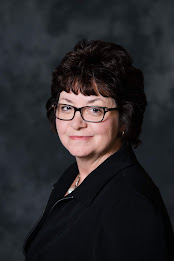
Beth’s combined experiences teaching the high school Sunday School class, substitute teaching in the public school, and connecting with the teenage staff at the fast-food joint where she claimed a “back booth office” helped inspire her young adult “Choices Matter” fiction series. She's a "cheerleader" for saving sex for marriage and for "renewed waiting" because it's never too late to make wiser choices. Her “Waiting Matters … Because YOU Matter” blog helps people of all ages navigate the choppy waters of saving sex for marriage while her “Slices of Real Life” posts find GOD in the day-to-day moments of real life.

 As a genetic genealogy enthusiast, she writes and speaks about her experiences as a "foundling" who located her birth parents. Her journey to find and connect with her biological family is chronicled in the blog series “A Doorstep Baby’s Search for Answers.” All of her writing endeavors can be found on her website, https://bethsteury.com


Tuesday, August 1, 2017

11 Reader Tips for Writers

IMG_9872
For new writers it can be tricky to know what to focus on. In a sea of rules and guidelines, what are the most important elements to perfect first? I always wonder what readers want to see in books, so I asked readers what they would tell new writers if they had the chance. This was a savvy group of responses. I hope you find it helpful!

Description:
  • One thing that is a drawback for me is if I feel like the writer could say something very simply, but I can tell that they are trying to use more words or fancier words, than are necessary. It is one thing to paint an image or convey an idea with strong vocabulary, but another if you are trying to force something that isn't really there... don't try to just fill a page or use complicated vocabulary if that doesn't come naturally to you. Think about your audience and think about how you would tell the story if you were "telling" it, instead of writing it.
  • Some descriptive detail is good but don't go overboard with it. The character development is a lot more important than a description of the room where they are.
  • The story and characters need to capture me in the first 20 pages.
  • I love many new authors, as they seem to take the time to really make each word count. The story is incredible. Sometimes the ones that don't focus on keeping the quality in their stories lose me. Have a picture of the story you want to share to others. Make the words describe it.
Dialogue:
  • Authentic conversation style for characters. I have read some very good stories, but when the conversation is too stilted and unnatural, even though it may be good grammar, it just doesn't feel real.
  • Good dialogue, action in beginning, less flowery language, super plots & believable characters!
Editing Matters!
  • That editing is everything! You can have a great story, but if it's not well-edited I'm going to trip up on mistakes and the flow will be interrupted.
  •  Make sure they are well-edited with no spelling errors, punctuation errors, etc. Have several people who are good proofreaders read it before publishing. If there are multiple errors in a book, it distracts me from the story.
  • Spelling , Spelling, Spelling! I detest reading a decent story when there are so many mispelled words!
Characters:
  • Believable characters with believable feelings.
  • Personally, I struggle reading books written in first person. As a result, when I find a book is in first person, I'm loathe to delve into it.
Come back next week for more tips. If you're a reader, what would you add to this list to encourage newer writers about what you love to see in books?

An award-winning author of more than twenty books, Cara is a lecturer on business and employment law to graduate students at Purdue University’s Krannert School of Management. Putman also practices law and is a second-generation homeschooling mom. She lives with her husband and four children in Indiana.

Saturday, January 9, 2016

Crazy Editor Interference—It Can Be Worse Than You Thought


As an editor, I take pride in not interfering with a novelist’s voice and ultimate decisions. No, really. I always, always have the author’s well-being at heart, and I am always, always nice, not the least bit crazy. At all. Well, except maybe for when . . . 


The Find-a-Synonym Game Goes Wrong

We all know a synonym is a word or phrase that means exactly or nearly the same as another word. But it’s the “nearly the same” that can make me a little crazy. For instance, I think one grimaces when in pain, either physically or emotionally. Yet Microsoft Word lists grimace as a synonym for frown, and I have seen that synonym used in more than one book without said pain, making me want to grab a permanent marker. 

As someone who is sorta kinda entitled to her own opinion, I beg you not to go with grimace for the heroine who is merely unhappy, not even though Word says it’s okay. Not unless she is also in the middle of a grimace-worthy ugly cry or has truly and severely broken bones in her body. For all that is precious, please play the synonym game by my rules. Sniff, sniff.


Notoriety Is a Good Thing

If I made a list of word misuses, notoriety would be at the top. And this time Word's list of synonyms back me up. Notoriety is not a good thing. It does not mean one is “of note.” It means notorious, bad. Downright nasty sometimes.

So if you tell me your character has gained notoriety for his crimes, fine. But if your character comments that Mother Teresa gained notoriety for her good works, I am climbing through the cybersphere to get you. And while I have you by the neck, I might go after you for other possible infractions, like penning anxious when you really mean eager, or jealous when you really mean envious, or . . . Oh, sorry. I got carried away, and some of that goes back to the synonym game anyway. Interfering is hard work.


Bodies Can’t Do That

This is a hard one, I know. But again, I am begging. Unless your hero swallows the tears coming out of his eyes and flowing down his cheeks, those tears cannot clog his throat, right? Yes, I know you don’t want to write about the gross snot that can drain into his throat, making for a nice, debilitating clog so he can hardly tell his love how much she means to him, but, please, work around this somehow. 

And think about your heroine’s poor, poor heart. If it drops into her stomach or lodges in her throat one more time, she might not make it to the last chapter of your book. I can see it now, on page 184: 


Publisher’s Note: We’re sorry, but this novel has ended a little bit prematurely, before the really good, award-winning part, because the character of Mary succumbed too soon. Her heart traveled to and from her stomach one time too many. But we hope you’re still eagerly [not anxiously, unless you are quite concerned about who will replace Mary] awaiting book two in this thrilling series, Body Wars.  


Okay, okay. I’m not really a bug-eyed, crazy editor. Not much. But, yes, if I ever edit something for you, and your novel involves lips, I may have to ask if you are sure lips can form a thin line. Just because my fat lips won’t do it doesn’t mean it's not possible. I’d just like some photographic evidence, please. Is that too much to ask?

After twenty-four years with publishing house Zondervan in Grand Rapids, Michigan, most recently as an executive managing editor, Jean Bloom returned to Central Indiana to be near family and take her freelance editorial business full time (Bloom in Words Editorial Services). Her personal blog is Bloom in Words too, where she often posts articles about the writing life. She and her husband, Cal, have three children and five grandchildren.


Photo credit:  http://www.publicdomainpictures.net/view-image.php?image=109069&picture=fuzzy-mascot

Saturday, September 12, 2015

Dear Author: Mistakes Are Okay

By Jean Kavich Bloom

Occasionally novelists whose work I'm editing seem to feel they should be apologetic when I catch a mistake they missed: a time line a bit off, a character name switch, the fact that it is snowing in August. Okay, that last one has never happened, but sometimes characters don’t seem to own coats in January in the Midwest, and that’s the exact same thing, isn’t it?

This makes me feel a little bit as though they think the editing waters could be shark-infested, and I could be one of the poised-to-strike sharks when I see a little blood, even though I am pretty sure I have never been shark-like at all.

But you know what? I get it. I don’t like to make mistakes, and I especially hate for anybody to see them, lest I be judged. Maybe it's also the perfectionist firstborn thing. I doubt all novelists are firstborns, but they are writers who want to get it right.

So I’m composing a little letter to all the novelists who have ever cringed because their editors foundor might finderrors.


Dear Author,


Here are five reasons you should not feel bad when your editors catch mistakes: 


1. You make errorseven with all your self-editingbecause you are human. If you weren’t, you would be no fun to work with. Nope, no fun at all. We rather like the "treasure" hunt, even though only we would think of mistakes as some sort of the-glass-is-not-yet-full positive.


2. Mistakes don’t water down your story and message for editors. Those precious diamonds, even if they are still a little rough, shine through.


3. Every time you rewrite, every time you make a change, an error can be introduced and missed. But so what? You work hard to improve your story for the sake of your readers’ experience. That’s a good and admirable thing. You don’t just phone it in with a first draft.


4. Mistakes found in editing are no indicator of future sales. Really, they’re not. Really.


5. The best editors can make mistakes, too, even while working to spot and help fix yours. (See point 1 about humanness, and do not make me tell you about my own errors.)


There. If you have ever been afraid to be edited—or you dread it every time—now you know. The editing waters are safe. No sharks allowed.

Come on in!


After twenty-four years with publishing house Zondervan in Grand Rapids, Michigan, most recently as an executive managing editor, Jean Bloom returned to Central Indiana to be near family and take her freelance editorial business full-time (Bloom in Words Editorial Services). Her personal blog is Bloom in Words too, where she often posts articles about the writing life. She and her husband, Cal, have three children and five grandchildren.

Image Credit: http://www.publicdomainpictures.net/view-image.php?image=82824&picture=shark-replica-3

Saturday, July 11, 2015

The Mind of a Line Editor

by Jean Kavich Bloom


For new authors, the editorial process can be a mystery. Then when they are in the thick of it, the number of editing and proofreading rounds can be both surprising and daunting. (For one thing, how are they supposed to concentrate on writing their next book if the one being edited keeps popping back for attention?) But at least when a book gets to the last editing stage—known as line or copy editing—they can see the light at the end of the editorial tunnel. Trust me, proofreading is not as intense!


**
Authors experiencing a line edit for the first time might wonder how the editor will approach the work. Or more to the point, how he or she will approach their book. I can speak only for myself, so here is a peek into my process.  


1.       I listen to understand. If I don’t know the author, and especially if a publishing house has not asked me to work with the author directly, I try to find a video of him or her speaking. I can often find one on the author’s website or on YouTube. Literal voice is not the same as literary voice, but I still have a better sense of who that author is and how personality might be infusing the work.

2.       I read to understand. I try to read more than edit the first time through a manuscript. Yes, I correct some grammar, spelling, and punctuation nuts and bolts as I go along (most line editors can’t help themselves!), and to ensure I won’t overlook them later I highlight places where I will need to give extra attention. The most important aspect of the first read-through, however, is that I get to know how every element is intended to work together to make a whole.  

3.       I champion the reader. As I read for the second time, the detailed and final work of editing begins. Word by word and line by line, I put myself in the reader’s place. Editors before me have cared for any structure or pacing issues—especially in novels—for example, but my job is to try to ensure that no reader is unnecessarily stopped cold—or even slowed down—by error or squishy-ness. Plausibility issues, word choices not quite on target, repetition, and so on are all on the table on behalf of readers.  

4.       I champion the author. I know every page—sometimes every word—an author crafts is hard-won. Writing is a joy, but it is also hard work. Though I am forthright about what I think, in my expertise and opinion, needs to be addressed, my goal is to help the author make the book the best it can be, supporting his or her career. I am always aware the book is not mine, but I am also aware it is my responsibility as an editor to treat it as carefully and thoroughly as if it were.  


Editing is a wonderful profession; we editors care about editorial excellence. But I hope authors understand above all else that most editors—even the ones examining every word and line—care about them, their work, and their readers just as much as they care about the nitty-gritty of language and writing technique. 


After twenty-four years with publishing house Zondervan in Grand Rapids, Michigan, most recently as an executive managing editor, Jean Bloom returned to Central Indiana to be near family and take her freelance editorial business full-time (Bloom in Words Editorial Services). Her personal blog is Bloom in Words too, where she often posts articles about the writing life. She and her husband, Cal, have three children and five grandchildren.

**http://www.publicdomainpictures.net/view-image.php?image=56284&picture=computer-keyboard

Thursday, September 4, 2014

"It's Not Quite There."

by Rick Barry

In response to a manuscript I once submitted to an agent, I received the following reply: "It's not quite there." The agent was polite. The note was even handwritten, which I appreciated. However, as I sat and reread those words, I wondered what my story needed to be "all the way there" instead of not quite there. The problem was, I'd already spent so many hours with my characters and their predicament that I could no longer view my own pages objectively.

After that experience, another writer requested that I take a look at part of a manuscript and give some frank feedback. (By the way, only frank feedback is helpful. Feedback that praises the writer when the quality is lacking actually hurts the writer by instilling false confidence and misleading him or her.) As I read the pages, I truly wanted to tell my acquaintance, "This is great. Keep up the good work!" Instead, the words that came to mind were "It's not quite there." And I understood what the agent meant about my own story.

You see, the draft I was reading simply lacked polish. At times the heroine did things that didn't make sense based on what the story revealed about her. She was also a bit of a cardboard cutout rather than coming across like a real person. For the most part, the grammar and punctuation were okay even if not stellar. Yet, sentence by sentence the story simply unfolded in a straightforward way from Point A to Point Z. There were no clever plays on words. No irony. No red herrings to keep the reader intrigued. The setting descriptions also lacked pizazz. Sure, there were descriptions of locale, so I knew where the heroine was. But those locations didn't come alive. There were sights and sounds, but little or no sense of smell, of taste, or touch.

In other words, as I proofed this manuscript, it certainly was complete as far solving the mystery and uniting the boy and girl. But was the tale polished to the point where a publisher would say, "We'll offer you a contract for this"? Regrettably, no. The story wasn't quite there.

With the input of a professional writing coach, I attacked my story with hammer and chisel. I knocked off rough portions I'd left in the story, injected fresh elements where needed, then grabbed sandpaper and started polishing. The end result is an improved manuscript that caught the eye of a literary agent. Now she is shopping that story to publishers.

What's my point? Try to scrutinize your own words with a professional eye, not with your author's eyes. Step back. Be objective. Compare your style, your phrasing, your everything to the writing of your favorite authors. When you can see why your story is "not quite there," you will have taken the first step toward improving it!


Rick Barry has freelanced hundreds of articles and short stories, had two novels published, and has more projects in the works.