"Hoosier Ink" Blog

Showing posts with label Agents. Show all posts

Wednesday, September 19, 2012

Interview with Author Jill Williamson

Today I'm pleased to interview award-winning author Jill Williamson, who enjoys creating "weird books for teens." Let's get started!

Jill, you've been a reader since childhood. At what stage in life did you realize you wanted to write for publication?
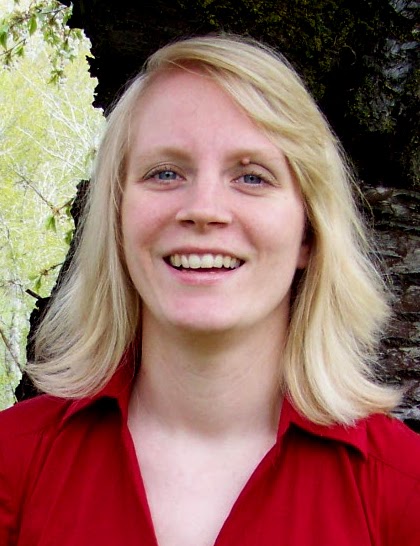
Jill Williamson
Not until I was about twenty-six years old. I had recently left the fashion industry, which had always been my dream. My husband and I were very involved in our church, working with teens. I wanted to do some kind of speaking to teens, to motivate and encourage them.

I discovered that sometimes, people hire speakers based on articles written by the speaker. So I looked into writing articles. Then the new Harry Potter book came out, and a new barrage of debates within the church community flared up as to whether or not the books were bad for Christians to read. The debate inspired me to write my own teen novel that all Christians would love. Yes, I was very naive. I have since learned that no one likes every book. But that’s how I got started. I was inspired to try and write blockbuster-style stories for teens that glorified God.


You've been published by the large firm Zondervan and by the newer and smaller Marcher Lord Press. Please share some of the differences in working with distinctly different publishers.

The editorial timeline is a much slower pace at Zondervan. Everything happens right before the release at Marcher Lord Press. Zondervan has more money to pour into marketing, where Marcher Lord Press has limited resources. Also, and probably the biggest difference, is that Zondervan books are stocked by bookstores. Marcher Lord Press sells primarily online. With Marcher Lord Press, since there are only two employees, I tend to get answers to my questions right away. Zondervan can take longer.


You've written fantasy, sci-fi, speculative contemporary fiction... Because author branding is much discussed, how do you view branding as it applies to your own writing? Can you categorize the fruit of your imagination?

For me, as long as it’s weird, I can write it. Anything that falls under the umbrella of speculative fiction is fair game. Yes, author branding is important, and I could have tried to become the medieval fantasy lady, and probably been more successful, but that’s not me. I’m far too random of a human being to stay that focused.


Your latest release, The New Recruit, is unlike anything I've read before. Please share a few words about it, including how the seedling for that idea first took root in your imagination.

The New Recruit is about a boy who is recruited into a spy organization that fights both the supernatural and groups that set out to turn people from Christ. Here is the back cover text:

Forced to choose between military school and a Christian spy organization, skeptic Spencer Garmond signs on with the Bible geeks. But before he even boards the plane for Moscow, Spencer realizes this is no Bible club.

These guys mean business.

Stumbling onto a case involving a gang of homeless boys, a chilling tattoo, and the always beautiful Anya Vseveloda, Spencer struggles to find the faith needed to save the Mission League from enemy infiltration.

This was the very first book I ever wrote. I pieced it together in a very backwards way. I was trying to write a story about teens going out into the world like missionaries, but since teen fiction books about missionaries weren't getting the attention of agents and editors, I thought, let's tweak the story and turn them into undercover agents.


How far into the future do you plan your stories? Are you planning the next one while writing the current one, or do you take them one story at a time?

I always have several ideas in my head. I try to stay loyal to one until it’s finished, but that doesn’t usually work. So, oftentimes I’m writing one story, and then I need to take a break to work on brainstorming a new idea and writing the proposal. Once that’s turned in, I go back to the story I was writing. I’d rather not bounce back and forth, but I think that’s how it has to be when you release multiple books in one year.


It's no secret that writers' choices of reading material help to shape their creativity. Name some major literary influences in your past reading.

Books I loved as a child: Nancy Drew, Little House, Anne of Green Gables, The Hobbit, the Narnia books. When I grew up, books I loved: John Grisham, Peretti, Francine Rivers, Tolkien. And I wasn’t really inspired by books to become an author. Once I began to write, so many authors inspired me. Here is a list of authors that have impressed me in one way or another: Frank Peretti, Ted Dekker, Megan Whalen Turner, JK Rowling, Rick Riordan, Scott Westerfeld, Robert Liparulo, Melody Carlson, Robin Jones Gunn, Bill Myers.


Share a few words about your relationship with your literary agent, Amanda Luedeke of MacGregor Literary. When and how did you get acquainted? Had you communicated with other agents before Amanda?

I’d had an agent prior to Amanda. And my previous agent was a good man and a good agent. But he wasn’t the right agent for me. So beforeI met Amanda, I was agentless, and I’d been praying for someone who really loved my writing. I wanted more than an, “I can sell this.” I wanted someone who actually liked my stories. When I saw that Chip MacGregor had added Amanda as an agent and that she was going to be at the Oregon Christian Writer’s conference (her first conference, I think), I felt like God created an agent just for me. I saw Chip and mentioned that I’d signed up to speak with her, and he went out of his way to introduce us. (That was so cool, by the way.) And one of the first things Amanda said to me was, “I really like your writing.” I was so happy. I didn’t care that she was brand new to agenting. She was the answer to my prayer. And she and I get along really well. I’m very blessed to have her on my team.


So far, you've been targeting young-adult audiences. Are these the readers you want to stick with, or do you have plans to write for adults too?

I have no desire to write for adults. I suppose I could. And my Blood of Kings trilogy was considered adult by my publisher, even though I consider it YA. But I feel called to write for teens. I’m always open to change, but I don’t see that happening in the near future.


You're a wife and mom, which undoubtedly demands much time. How do you manage to carve out hours (or minutes) for creative writing?

My kids are in school now, so I have all day, Monday through Thursday (only four days of school where I live) to write. Summers are harder. My husband is very supportive and does a lot with our kids to give me the time I need.


From your own experience, give one piece of advice for writers who have been studying and polishing their writing craft but who want to improve and grow in their skill. 

Just write more. The more books you write, the better you’ll get. And you can go back and rewrite old stories. But nothing is better than putting in time at the keyboard.


Are you working on any more books? If so, can you tell about them?

I’m working on Captives, which is the first in a dystopian trilogy coming out from Zonderkidz next February. It’s based on Daniel 1, when Jerusalem in conquered by Babylon and the young people are taken into the city.


Do you have a website or blog where readers can find out more about you and your work?

Yes, here are my links:


Thanks, Jill!

--Rick Barry

Tuesday, February 14, 2012

You Don't Want This Agent!

by Rachael Phillips, with appreciation for help from Jenna Glatzer and Daniel Stevens, "Testing the Agent Waters" in Writers Digest

Given today's publishing climate, most of us find it advisable to procure an agent, a business and literary advocate who will help sell our work, manage our careers, and when nobody seems to appreciate our literary genius, hold our hands.

However, we do not need someone handing us an anvil disguised as an agent contract. The agent industry is largely unregulated, so a plumber with no other qualifications other than he reads Reader's Digest and resembles Charles Dickens can hang up an agent shingle, establish a Web site, and sign unwary authors unless they heed the red flags listed below:

The agent charges fees for reading/representing your work. She can tout these as reading fees, retainers, set-up fees, evaluation, editing, or you-breathe-therefore-you-will-pay-me fees. If you are unpublished, she may say she'll refund your money when your manuscript sells. Run away screaming if you encounter such a person. Good agents make money from selling manuscripts, not inventing fees.

Disclaimer: Some legitimate agents include minimal charges for copying, mailing and/or travel expenses in your contract. They supply you with itemized statements. Never sign with an agent who expects you to foot all the bills.

The agent writes/speaks/presents poorly. Warning signs include typos in correspondence, bad editing, poor phone skills, powder blue leisure suits and picking his nose. Even if this person appears legitimate, do you really want him to represent you to the industry?

The agent conceals his selling history. A new agent should evidence experience as an editor, sales director, author, agent's assistant, publicist, or book packager. A seasoned one should be able to name books she has sold and authors she has worked with. There is no ethical problem with divulging this information. If the agent says, "My client list is confidential," it's probably nonexistent.

The agent displays overall industry ignorance/lack of skill. If you know more than the agent, don't sign with her.

The agent presents an unprofessional Web site and/or e-mail. Freebie sites indicate the agent is not making enough money by sales. Stay away from agents with Homestead, AOL, Hotmail or Yahoo Web sites with long URLs and banner ads. No cutesey e-mails, either. Do you want someone with loveskitties@cybernet to represent you to editors?

The agent tries to re-create clients in his image: "Always keep in mind that although an agent may possess the map to get you to your destination, the car still belongs to you." Christina Hamlett.

The agent makes it difficult to break off the relationship. Do not sign away your life to an agent; We're talking business here, not wedding bells. Most legitimate agent contracts allow either party to send a 60-day notice if she/he wants out.

A good agent (and I'm incredibly blessed to have one) can help make your career. A bad one, representing your work poorly, may cause repercussions long after you've fired him. Editors may dislike your work simply because of the bad agent. And you may find it difficult to persuade a good agent to accept your work, since it's already been shopped in the industry by the loser.

Bottom line: do your homework before you sign on the dotted line!

Wednesday, March 9, 2011

Networking Is Just Another Word for Making Friends

Indiana Chapter of ACFW at a November Meeting
Are you networking with your fellow writers? I've heard plenty of people say they are busy writing and don't have time to "network" with other writers, but there are good things that come from knowing groups of writers. There is a time to write and a time to make writing friends!

Writing is one of those industries where knowing the community can be a good thing on many levels. Ask a published author. Each has their own story of how she connected with this person and that person in writing. Soon, like some crazy patchwork quilt, it all fit together to make this beautiful story come into print.

Like anything else, balance is good. Write in solitude. Rewrite in community. Some of my best friends, or at least those who know me best in my heart, are writers. It's a great boost to my creativity and productivity to connect with people who understand me. They connect me to the right people,but also help me brainstorm, get a chapter right, or cry or rejoice with me. We're human. We need human connections. So, I ask again--who are your writer peeps? Who is your tribe? If you need a little help connecting in that area, we are here for you, right here in Indiana. Do you write Christian fiction? Have you been going it alone and wonder if anyone out there knows some more about this, knows who to send your manuscript to, or just knows answers to your questions?

We have a national organization and this will be your first stop on to connecting to a great community of all the people you need to know in Christian fiction. Go to the American Christian Fiction Writers web page to get started. The dues may seem pricey, but you get a lot for your money, and it's actually not as much as some other national professional organizations. You instantly connect with those in your genre, those who know a great deal about writing, and all those editors and agents. You get questions answered, a prayer group, free courses every month, can connect with critique groups--and you'll make life long friends who know exactly how excited you are to make a word count.

Are you wanting to meet up with fellow Christian fiction writers in Indiana? We have a group that meets statewide a few times a year, but we also connect on a writers' loop and many of us connect locally, too. Meet up with us at our state meeting April 9th, 2011. You may come as a guest or you can join our group after joining the national group. I'm including the information for our state meeting below, but do RSVP to me, Crystal Miller, by emailing me, or you can ask me questions about American Christian Fiction Writers.

Indiana State Chapter of the American Christian Fiction Writers
Meeting time: 12:00 Noon -- 2:30 p.m. on April 9, 2011
To RSVP email Crystal Miller crystal.mrsinewaATgmailDOTcom (fill in AT with @ and DOT with .) We reserve a room so we need a head count.

There is an entry fee of $10 for non-member guests, but members who are paid up on dues get in free and pay only for their meals. All are responsible for your own meal.

The location for our luncheon meeting is now locked in at a wonderful location: Jonathan Byrd's Cafeteria in Greenwood, Indiana, just south of Indianapolis. (You can peruse their website here: http://www.jonathanbyrds.com.)
Physical address: 100 Byrd Way, Greenwood, IN 46143. Their phone: 317-881-8888.
Literary Agent, Amanda Luedeke with MacGregor Literary Group
I’m very excited to announce that AMANDA LUEDEKE, agent with MacGregor Literary Group will be our speaker. See her bio below. She will be speaking and will answer questions.

About Amanda Luedeke

Amanda wrote her first book — a picture book entitled A Cat — when she was 5 years old. Though the scintillating masterpiece never made it to bookstore shelves, it solidified her dream to one day work in the book industry.

Amanda was a 2006 graduate of the acclaimed Professional Writing program at Taylor University Fort Wayne. Since college, she's made her living as a writer, working as a freelancer for local newspapers and marketing companies, while operating her own writing business.

Her love for writing and ability to think strategically landed her a full time job in marketing at an agency in Fort Wayne, Indiana. Since starting there in 2008, Amanda has written web and print copy for Vera Bradley, Baekgaard and Peg Perego. She's also assisted in marketing strategy for these companies, conducting research, launching social media sites and proposing and working on major projects targeted at the online consumer.

Yes, she knows ... she's one of those people.

She met Chip at an author signing in Barnes and Noble in 2008. After realizing they had a commonality in Taylor University, one thing led to another, and before she knew it, she was helping him with projects, research, and all the little stuff she now assumes he just didn't feel like doing.

Shortly after, Amanda was hired on as Chip's Assistant. She handled his slush pile, worked with his authors, researched projects, did the occasional writing project and realized that she just may have found her place in the industry.

Now, on board as an Agent, Amanda brings unique interests to the MacGregor Literary team. She represents general market and CBA spec fiction, YA, children's fiction, post college-aged fiction and non-fiction, and literary fiction.

Having lived all over the Midwest, from Iowa to Minnesota to Illinois, Amanda considers the Chicago suburbs to be 'home', though she's currently settled in Fort Wayne, Indiana, with her husband, Tad.


Come join us!

Friday, June 11, 2010

Those Niche Markets ~ by Agent Terry Burns

I (Millie Samuelson) have heard very little about niche markets since I started looking for a publisher nearly ten years ago. So when I read this recent Hartline Literary Agency blog by agent (and author) Terry Burns, I immediately started checking out some small presses for myself and my agent, Diana Flegal (also with Hartline).

Next I thought about sharing some of my reseach with you, the readers of this blog. But then I thought, why not ask Terry to share his comments here instead.

And here he is, Terry Burns sharing about niche markets with far more insights than I'll ever have, and far more concisely, too.


It was nice to have a group of clients all at one place and time at the Colorado Christian Writers Conference in Estes Park. I was able to get with all of them, but scheduling was such that I couldn’t put together a little meeting with all at once. I would have liked that, and had a great cabin it could have been done in. Maybe next time. Still, there was some strategizing, some sharing of information, and good times to just get to know one another better.

I do want to get all my clients pubbed. I know the odds say that I won’t, but I’m trying. It was interesting when the editors sat down on the “Future of Publishing” panel that they remarked how the midlist was disappearing, and it was becoming either big or little. The larger publishers not wanting to address any niche markets, and the small independents making a living identifying and serving the niche markets the bigs don’t want to do. Over the past year or so, I have taken some of my clients into these niche markets and have even gone that way with my own books.

I am still more interested in having major titles with major publishers, but I am not afraid to use the niche markets to try and get authors started. A larger publisher bringing out a book and not getting some significant five figure sales can hurt on trying to sell more books. An independent publisher set up to go into a market of modest four figures sales, and the author does so and does so with a solid number looks more attractive to another publisher than someone who maybe sold more books but where the expectation was higher. In other words, quickly selling out a print run of 2000 copies might be more impressive than selling 5,000 copies when the expectations were much higher than that.

All of the start-ups and small independents are serving some modest but very viable markets. The "Future of Publishing" panel saw that as an emerging trend and one that would be increasingly important. They also pointed out how quickly things can change in publishing these days, and these smaller organizations can identify changes and turn on a dime, whereas the larger ones need time to work change in the organization. They felt authors can benefit from the changing nature of publishing if they were abreast of the changes and could turn on a dime as well, maybe even a nickel.

Some of the new technologies are gaining a following, but again, the smaller organizations are better positioned to identify and utilize them, and again authors and agents are better positioned to identify and embrace such technologies. Larger organizations have the resources to make more effective use of a new technology once it is established, but the smaller ones will lead the way.

It's a brave new world in publishing.
Terry Burns, Agent and Author