"Hoosier Ink" Blog

Showing posts with label historical fiction. Show all posts

Sunday, October 9, 2016

Come hear Laura Frantz speak in November!

I'm so excited about our upcoming ACFW-Indiana event! I hope you'll RSVP and join us!

Check out this video of how one of her book covers was made. LOVE it!


Can't wait to see you there!

Wednesday, October 7, 2015

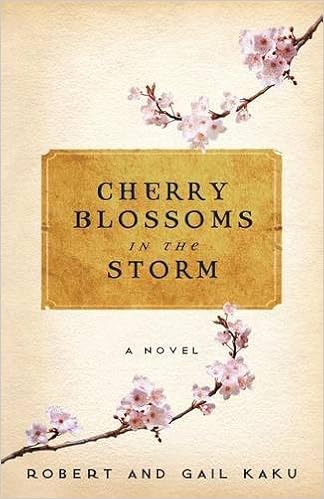
Review of "Cherry Blossoms in the Storm"


by Mary Allen


After the death of the father, an Japanese American  family is forced to separate for financial reasons. Two sons are sent to live with an uncle in Japan while the youngest remains in America with their mother. By the time Pearl Harbor is bombed the oldest son has yet to return. The family finds their loyalty and patriotism questioned on both sides of the ocean and their faith is tested. 

Akira, the son in Japan, is in love with a beautiful young woman whom he may lose when her father arranges a marriage for her. Meanwhile, their attendance at forbidden Bible meetings puts them both in danger. As the war heats up and personal rivalries break out, his American citizenship makes him a target. Conscripted into the army will he survive? Will their love?

The second son and his wife consider themselves fully American despite being rounded up at gunpoint and treated as enemies. They are moved into an overcrowded internment camp where their family of five lives in a single horse stall with others. They seek peaceful, godly ways to change the terrible conditions in the internment and prove their loyalty to the country they love. Will his efforts cause his death?

The youngest rails against being imprisoned unjustly. He chooses a more volatile path to draw attention their desperate situation. After the heavy price he pays, will he ever throw off hatred and submit his life to Christ?

The story pulled me along. I wanted to know what happened to each of these characters. I was concerned whether the family would be reunited. Would healing and forgiveness?   

The experiences at Japanese internment camps in WWII was an eye-opener, even though I was aware of this piece of American history. "Cherry Blossoms in the Storm"  is a historical romance that will interest anyone who enjoys reading about that time period. However, I think the telling of a Japanese story puts a different twist on this era. I also believe that it would make great supplemental reading for history students as it displays a little known event of WWII in an understandable and interesting way.


Alternating chapters deal with the simultaneous stories. The Japanese culture, formal and polite, is felt in the cadence of the writing. The familiar American culture is also expressed. In fact, the dialogue of the youngest son held a relaxed, even cocky tone that is common to American teens.

Authors Robert and Gail Kaku are third generation Japanese. The story is not based on family experience, because the family chose not to reveal this painful part of their history. However, it is close to their hearts. While the story is one of  hope despite tragedy during WWII, the message of hope of Christ in any circumstance is universal and true. May that message touch every reader.


Friday, May 25, 2012

Interview with Cynthia Simmons, Author of Struggles and Triumphs


This month, I'm honored to interview fellow ACFW member Cynthia L Simmons, author of Struggles and Triumphs (2008). She also is active in the Christian Authors Guild (CAG), in which she conducts writing workshops and has served as president, vice president, and conference director. She received a nomination for 2008 Georgia Author of the Year and has contributions published in CAG publications, NATHHAN NEWS, Chattanooga Regional Historical Magazine, Georgia Right to Life Newsletter, Chattanooga Times Free Press (my wife's favorite newspaper), Catholic Exchange, and Christian Devotions.us along with interviews on radio and TV across the nation. As if that wasn't enough, she also conducts monthly podcasts called CAG Spotlight in which she interviews authors and VIPs in the writing industry. She recently completed a twelve week Bible study using the stories in Struggles and Triumphs.

 JR: Welcome, Cynthia. Hope you have a blessed day. Your bio says, while you live in Atlanta,  you're originally from Chattanooga. As a person who visits that area once or twice a year, what would you say is a must-see in that area?

CS: Point Park and Chickamauga Battlefield is a must for Civil War buffs. The Chattanooga Aquarium is awesome too. Be sure and visit the English Rose Tea Room on Market Street. They have authentic British tea and scones.

JR: You've written Struggles and Triumphs, a collection of stories of historical women. I think it's been labeled as historical fiction. What is the line between writing history and fiction, especially involving real people?

CS: It’s much harder to research ladies from the past. Most stayed in the shadows supporting their husbands rather than taking center stage. Some women, like Katie Luther, left behind little material. My stories reflect a pretty accurate picture of each lady. I imagine the details and step inside their minds, to reveal what I’d be thinking in that situation.

JR: What was it like doing research for the book? Was it done more on-line, or did you do any traveling to the settings for the stories?

CS: I did a lot of internet research, but I didn’t stop there. My goal was to find material written by each lady so I can hear her voice. In several cases, I also visited the setting. In writing about Katie Luther, I visited Wittenberg, Germany and saw where she and her husband lived. I also had the privilege of attending the Metropolitan Tabernacle in London where C.H. Spurgeon preached. It’s incredible to visit in person. I always gain valuable information.

JR: You've now released a study guide for Struggles and Triumphs. What was that like? How did you prepare for that? (Maybe I ought to write a study guide for my murder mystery set at an apologetics conference.)

CS: For starters, my husband and I co-lead a Sunday school class, so I’m very comfortable teaching Scripture. The stories in the book present numerous issues I felt I needed to address. So writing the study guide completed the project for me. Plus, people told me they wanted to know more about the women, so the study guide gave me a chance to fill out the history a bit more.

JR: You have homeschooled your children, including one with special needs. How has that experience impacted your writing?

CS: I’m a lover of words, and I had the privilege of teaching all five of my children to read. My youngest presented the biggest challenge. He’s a clever fellow with an array of disabilities. In order to address his needs, I had to research and take classes in special education. On several occasions his special needs presented some pretty tough problems. The Lord used stories from history to encourage me and keep me going. I chose to write so I could share that encouragement with others.

JR: You have the privilege of speaking as well as writing. Your webpage mentions topics aimed for women and those for writers. One of the former subjects, "Trusting God In The Hard Times" seems appropriate for authors as well. What advice would you give to authors who are currently struggling? 

CS: I have several books that I’m very grateful for. One of them is A Grief Observed, by C.S. Lewis. Right after he lost his wife, he put his thoughts on paper and later published anonymously. (After his death, the publisher listed Lewis as author.) That book blessed many people and continues to be used. I also have a set of books by Susannah Spurgeon. As he instructed, she took material her husband wrote and compiled a biography of his life. She includes diaries, letters, and firsthand accounts. What a treasure! Peeking inside his life to see his struggles and choices gives such encouragement. Yes, writing is quite hard, but you never know who might benefit from your words. Someday in heaven you may meet someone who thanks you. Maybe your work will help a believer facing blinding grief or give another person the information he needs to fully trust God. We can’t measure our impact here and now. That will come in eternity. Keep writing!

JR: I forgot who said, "Those who fail to learn from history are doomed to repeat it." From your studies, is there anything you've learned from church history that we need to learn today?

CS: A multitude of Christian writers use fiction to tell the truth, and I like that too. I also enjoy telling real stories. It thrills me to find a beautiful story of faith where God guided a believer though tough times. History confirms the truths of Scripture, and it also demonstrates how God ministers through his church. Over and over he raises up a leader who calls the church back to himself. The stories are there, waiting to be unearthed and told. I love doing it.

JR: Before I let you go, what are you currently working on as far as writing?
CS: I’m working on a novel based in Chattanooga during the Civil War. My story surrounds a family owned bank. Someone is counterfeiting money, and the owners fear it could cause the bank to fail.

JR: Thank you very much for your time, and may the Lord Jesus Christ richly bless you.

CS: Thanks for hosting me. 

Below are links to her webpage and to a video interview of hers. 


Saturday, May 5, 2012

Don't Let Facts Get in the Way

Being a history buff, I am naturally drawn to historical fiction. It gives me a perfect excuse to spend hours loitering in museums, interviewing local historians, and snapping photos of deserted old buildings. (I love to do those things anyway, but now I can tell my exasperated family that I'm researching for my next novel!)

But when I started writing my first novel, one of those carefully authenticated facts soon dropped a roadblock across my way. I'd set my story in a real place, at a time that many locals still remember. Some pivotal scenes occurred at the town's train depot, which has now been moved to the county seat. But at the time of my story (1929), it stood on its original site -- about a mile west of where I needed it to be.

What to do?

I could relocate the entire story to another town with a train depot that stood next to its mercantile, as required by my plot, but what other obstacles might I find there? I could move the story to an imaginary town, but then I would lose potential marketing tie-ins to the real place. I could redesign the plot. (In fact, I actually tried that. But plot problems multiplied, due to the extra time required for characters to run back and forth between the store and the depot.)

Then it dawned on me: This is fiction. My readers know it's a story based on fact, not a journalistic record of the facts. If the county historical society could move that depot to another town, why couldn't I put it exactly where I wanted it?

As a history buff, I want to know exactly where the factual lines are. But as a storyteller, readers give me permission to color outside the lines.

Saturday, April 7, 2012

Anachronisms -- Check Your Calendar!


"The time is out of joint," Hamlet said, which makes for a memorable line in Shakespeare but memorable errors in fiction-writing.

(One struck me in a recent Bible-based novel by a famous duo of Christian novelists, published by one of the leading houses. They solemnly described the scene at Jesus' tomb, where Roman guards were posted "around the clock." Really? More than a millennium before clocks were invented? That line jarred my imagination.)

These anachronisms (contradictions of time) slip in all too easily, so I've learned to rely on a few web sites to check my novel's calendar.

Let's start with the calendar itself. I usually start a project by printing out a calendar for the year(s) in question and putting it in a looseleaf notebook. That allows me to confirm the day of the week any date falls on, or any holiday. Professor Dick Henry of Johns Hopkins University has an ingenious website that allows you to print out calendars for any year (or any month), Julian or Gregorian, BC or AD. (http://henry.pha.jhu.edu/calendarDir/julianDir/julian.html) It also allows you to download a PDF version of the calendar you choose, which gives you the phases of the moon for each day. (Handy if you're planning a murder on a moonless night.)

Birth dates, death dates, and key milestones in a famous person's life can usually be found on Wikipedia (http://www.wikipedia.com/). A copyeditor friend used to disparage Wiki because it's compiled and maintained by volunteers, but he's stopped complaining. Their biographical articles are usually quite reliable.

If you're using an unusual word or phrase, it's a good idea to check when lexicographers first noted its appearance. Merriam-Webster's free onlline dictionary (http://www.m-w.com/) is my favorite source for this. The entries for most words tell you when they first appeared in print. (The same site has a good thesaurus, too.)

Is your protagonist going to a movie? Better check the date that particular movie was released at the Internet Movie Digital Database (http://www.imdb.com). For popular music back to the early 20th century, try http://www.discogs.com

There are lots more, of course. What are some of your favorite web sites for checking the accuracy of dates in your stories?

Friday, August 19, 2011

History comes alive

Two little German farm boys edged up to a Union soldier at the edge of their camp. The young soldier was glad to tell them about his musket and bayonet. The boys were too bashful to say much but the young soldier, standing tall and straight in his blue wool uniform, filled in the gaps. His bayonet, by the way, worked out pretty well for roasting corn over a camp fire. That got the boys to laugh and ask more questions.

The freckle-faced boys and the rest of the family were actually visitors from the year 2011.

Our family took a trip to Conner Prairie this summer. While the kids saw a lot of Indiana history re-enacted, my writer's mind raced.

Living history events fascinate me. I so enjoy seeing period details brought to life. For instance, the young soldier was about 20, about the same age as many Civil War soldiers. He showed the kids percussion caps and heavy lead Minie ball bullets, then pointed out a surgeon's operating room in a farm out-building. Nearby, a lady store keeper struggled to sound calm as she described Confederate raiders plundering through her shelves and burning their store house. I couldn't help noticing the pretty shape that hoops gave to her calico dress, how her hair was done and how the store was set up.

We were able to go back a generation earlier in the 1836 Prairie Town settlement and restored Conner House. Mr. Conner balanced between two worlds, Indian and white, in his many adventures. A fur trader and scout, he married an Indian and had several children with her, but lost her when she took the children and moved West with her tribe. A lot of drama there. What did his second wife think of all that?

In the kitchen one of the volunteers told us all about cooking over the huge fireplace and using the beehive oven next to it. A Dutch oven sat on the hearth and she let me use a pot hook to take the lid off and move the crane around. How would an 1830s house wife prepare a Sunday dinner? We talked about that as well as the dangers of fire to women and children.

All of this suggested bits and pieces for my work-in-progress, set in Indiana during the Civil War.

For a burst of ideas, for me a living history event is an excellent source.

Friday, August 5, 2011

Expecting!

My granddaughter, Maggie Ellen Faith Akins

It took longer than nine months, but my baby is due any day now!

If you're a writer you know I'm referring to a new book release. (As far as I know, angels haven't stopped by to inform my husband of an impending birth. If that happens, unlike Sara, this 50-year-old granny won't laugh. She'll pass out.)

I'm terribly excited about my new baby, er, book and I want to remember this feeling because I think the emotions might be very similar to the first time you deliver a human baby--nothing compares with the awe and wonder of it. I can hardly wait to hold it in my hands and count its fingers and toes, er, its pages. 

I've been published in compilations and magazines, but this is my first true blue book with my name on the front cover. Excuse me while I gush. It's embarrassing, I know, for those of you with million-dollar contracts, to observe my shameless blush of success. But for this girl who dreamed of being a writer from the time she could read, it's rapturous living on that giddy cloud of nine.

My book, O Canada! Her Story: Historical Narratives and Biographies that tell Her Story, is due out sometime this month. It's written for middle grades and the target audience is homeschoolers. But much like a Pringles potato chip, releasing a book is addictive. I'm eager to get to the next one. 


My new website is ready and I've started a mailing list for those interested in writing and history. Writing this book clarified something for me: while I enjoy writing humorous-contemporary fiction, I'm passionate about creating historical faction. That is, stories based on real events and people in history. 

I still write my columns at Examiner  and Mother Nature Network. I recommend column writing for anyone because it teaches you to write succinctly and to "just get 'er done." It does this for me, anyway. If you're not yet published, I encourage you to build your writing resume this way.


I think all projects take you to a new level of skill, or a new perspective of what it is God wants to say through you. One thing I've learned so far in this writing journey is that you've got to write a whole lot of twaddle before you get to the good stuff. So keep writing. Even when you don't feel like it, put your backside in the chair and write. (This is why writing columns is helpful. You've got to write something every day.)


What has God revealed through your writing experiences lately?  In what ways have you grown? I'd love to know. Write on!

Karla Akins is a pastor's wife, mother of five, and grandma to five beautiful little girls. She lives in North Manchester with her husband, twin teenage boys with autism, and three crazy dogs. Her favorite color is purple, favorite hobby is shoes, and favorite  food group is cupcakes.

Friday, April 8, 2011

Biblical and Historical Fiction

Lenten Greetings and Blessings!

When you read this, I'll be on my way home from a week's vacation in Paris and London, a trip sponsored by my husband's company. And Dave and I will have "done" the Chunnel for our first time, plus much more. Will you see some of our trip in my WIP? Of course. . .

We'll have "done" the Louvre for our second time. This time, I'll have focused on the Louvre's Last Supper paintings, which may be titled something else (according to my research). Why those paintings? For a decade now, I've been writing the memoir-like stories of men, women and children disciples who were likely at Jesus' last Passover Seder family meal, likely held in the hall of a wealthy home that could hold more than 200 people.

I've been interested in Jesus' followers, especially the "girls"/women and children, ever since I was a young girl myself growing up in China with my missionary parents and grandparents. You can read more about that in my book, Women of the Last Supper: We Were There Too.

The stories of Jesus' disciples that I've written have been portrayed nearly every year for a decade in "my" church. (See the photo above for this year's disciples, missing several.) First I wrote the twelve men's stories, then twelve women's stories, and now I'm writing six children's stories. This year my new story is "Anne," Jesus' younger sister who is mentioned in the Gospels, although not named like their four brothers are (Matthew 13:55, Mark 6:3).

I share "Anne's" story with you today, and trust it will help prepare your heart for the glory of Easter. Are my viewpoints controversial? You bet! But they are extensively researched, both Biblically and historically. And I feel called by God to share this perspective whenever possible.

A BLESSED SISTER: “ANNE”

I am Jesus’ younger sister, “Anne.”I was named for our maternal grandmother, whose name is known from Christian tradition. My sister and I and our four other brothers, James, Joses, Judas and Simon, are mentioned several times in the New Testament, but most people don’t know much about us.

As you might guess, my siblings and I dearly loved our wonderful oldest brother, Jesus. Although my brothers waited until after Jesus’ ascension to heaven to become his disciples, my sister and I eagerly became two of his first followers, along with our beloved Mother Mary. So, of course, we were there for Jesus’ last Passover, that special meal that would become known as the Last Supper and commemorated for two thousand years by Christians, like you.

My Mother Mary and her sister Salome, my aunt, were blessed sisters because of how they were related to Jesus. But I, too, was a blessed sister, because I was one of Jesus’ younger sisters.

It was so awesome to grow up with him as my older brother. Perhaps you have heard that some Biblical scholars think my siblings and I were really Jesus’ cousins or Joseph’s children by another wife. But if that were so, why didn’t the Gospels call us his cousins, or tell about Joseph’s other wife? And why were my brothers repeatedly named in the New Testament and called Jesus’ brothers, even by the townspeople of Nazareth? Thankfully, many theologians affirm we were his siblings, Mary's other children. And I’m eager to share with you just a bit what it was like to be Jesus’ sister.

Do you have a brother who can fix anything? My brother Jesus could. He could even fix things and animals and people that nobody else could. How do you suppose our Mother Mary knew he could turn water into wine for that wedding feast in Cana? We, his family, had already experienced many times his special powers from Yahweh. He could perform miracles like the prophets in our Torah. But he always told us not to tell anyone.

When I was little, in the evenings Jesus used to lift me to his lap and tell me stories about how much Yahweh loved me. Of course, other children and teenagers gathered around us as we sat on the stone bench in the cool shade of the olive trees behind our home. Sometimes he carved little toys for us from scraps of wood from our family’s shop.

I’m sure you know we Jews loved to sing and dance, and my brother Jesus was no exception. He had a beautiful voice, and a special way of clapping his hands and tapping his feet. He and our other brothers often sang Psalms together in harmony. My other brothers sometimes forgot the words, but Jesus never did. He was the one who led the singing during our Passover Seder celebrations each year. Our relatives and friends used to say Jesus had the most melodious voice they’d ever heard. They said he sang like an angel. They were right! When I close my eyes, I can still hear him singing my favorite song, Psalm 23.

I was one of those who watched Jesus ascend to heaven a short while after his cruel crucifixion and resurrection. Watching him disappear into the clouds was a glorious and exciting ending to his time here on earth.

Yes, I was an ordinary sister transformed by my extraordinary brother. You, too, can experience this transformation, and live or die for the glory of God.

Easter Joys and Blessings, Millie Samuelson :-)