"Hoosier Ink" Blog

Showing posts with label legal issues. Show all posts

Thursday, December 24, 2015

Calling Scrooge a Miser


Today is Christmas Eve, so I’m going to pretend that Scrooge is a real person and you are getting ready to write an article or a biography or some other non-fiction piece denouncing him as a miser. From what we know, Scrooge acted like a skinflint, and a statement can’t be defamatory unless it’s false. But for our purposes, assume it is. Since I’m trying to stick with a Christmas theme, our Scrooge is a secret Santa who gives liberally to the poor.

Obviously, lots of people write memoirs, biographies, and other non-fiction manuscripts that say negative things about living people. These writers take a calculated risk that they can defend against a defamation charge, and they hope the defense is so obvious that the person won’t bother to sue in the first place.

So where do you start when writing about Scrooge? With research, of course. Research, research, research until you are comfortable that your sources are trustworthy and the information is true. Even if it turns out to be false, your good faith, reasonable belief in its truth is a defense.

In most circumstances, calling someone a miser is an opinion, and opinions are not defamatory. But the nature of the statement must be clear from the context, and merely saying that your words are just an opinion is not enough. If you label something as an opinion and go on to imply that it is fact, the jury will look beyond the label.

That brings me back to a point I made in an earlier post. It isn’t what you say that matters. It’s how a judge or jury interprets it. So be especially careful in how you say it.

My final suggestion works for both fiction and non-fiction: get the person’s consent.

What? Why would someone agree to be defamed? For the same reason people agree to go on reality television shows where they come across looking like jerks. Some individuals will do anything for publicity or money. Or they don’t realize how their conduct looks until they read about it on paper, see it on tape, or hear their friends’ comments.

Consent is a defense to defamation. Just make sure you get it in writing and that the consent is broad enough to cover everything you want to say.

Of course, you can’t really defame Scrooge. Not only is he a figment of Dicken’s imagination, he is also long dead. You can’t libel the dead, so if you are looking for an interesting person to write about, try Grover Cleveland or Emily Bronte or Michael Jackson.

God’s blessing as you write on in 2016.

__________

Kathryn Page Camp is a licensed attorney and full-time writer. Writers in Wonderland: Keeping Your Words Legal was a Kirkus’ Indie Books of the Month Selection for April 2014. The second edition of Kathryn’s first book, In God We Trust: How the Supreme Court’s First Amendment Decisions Affect Organized Religion, was released on September 30, 2015. You can learn more about Kathryn at www.kathrynpagecamp.com.

Thursday, November 26, 2015

Don't be a Turkey


Today is Thanksgiving, and most of us will sit around a table with family and friends eating turkey. These dinner companions are the people we know best, and some of them may have led fascinating lives. So it’s only natural to want to write about them.

But that could make you the turkey at the feast. So how do you get away with it without wrecking your relationships or getting sued for defamation?

As mentioned last month, nothing you do will guarantee that you don’t get sued. Still, there are actions you can take to make a lawsuit less likely or to make winning the probable outcome if you do get sued. They also may save your relationships with family and friends.

This month’s post gives suggestions specifically related to fiction. Don’t assume that you are safe just because of the label. While fiction gives you a little extra leeway, “little” is the operative word. And the main function of a disclaimer is to give you a false sense of security. Disclaimers may discourage some lawsuits, but they don’t usually work as a defense.

The basic test is whether people who know the person claiming to be defamed could reasonably believe that the fictional character portrays the real person. If they could believe it, the jury gets to decide whether they would believe it. So what can you do to keep people from believing it?

The best approach is to disguise, disguise, disguise. Change as many facts about the person as you can. Does it really matter that the character is tall and blond like your friend, or could she be short and dark? What about changing his age and profession? Depending on the story, maybe you can even change the character’s gender.

I call this the amalgam approach to creating characters. Let’s say you are fascinated by Aunt Becky’s profession as a stunt double and you want to turn her into a fictional thief who uses her skills to get into places most burglars can’t go. Give her a different name and physical description and mix in several noticeable characteristics she doesn’t have, such as your friend Mary’s shrill laugh and your boss David’s habit of rubbing his left leg when he’s nervous. Now Aunt Becky is no longer recognizable. Or at least you have changed her enough so that the reader who knows her will realize the character is mostly fictional.

For some types of fiction, you can also make the character or the character’s behavior so outlandish that nobody in their right minds will believe it. This isn’t a “nobody who knows her would believe she would do something like that” defense. It’s closer to “even if they don’t know her they’d be fools to believe it.” That’s how most people get away with parodies about famous people.

If you want to write about real people and situations in your fiction, change enough facts to disguise the characters. That takes more work, but it is also more creative. And isn’t that the goal?

Next month I’ll turn to non-fiction.

__________

Kathryn Page Camp is a licensed attorney and full-time writer. Writers in Wonderland: Keeping Your Words Legal was a Kirkus’ Indie Books of the Month Selection for April 2014. The second edition of Kathryn’s first book, In God We Trust: How the Supreme Court’s First Amendment Decisions Affect Organized Religion, was released on September 30, 2015. You can learn more about Kathryn at www.kathrynpagecamp.com.

Thursday, October 22, 2015

"But I Didn't Use Her Name!"


Writing about real people can be dangerous. Writing about the mob can get you a pair of cement shoes. But writing about your best friend can buy you a lawsuit.

This post isn’t meant to discourage anyone from writing about real people. But the responsible writer will weigh both the benefits and the risks and take steps to minimize the latter.

So what can you do to avoid a lawsuit? Unless you are the Godfather of movie fame, there is no foolproof way to keep people from suing you. There are a number of things you can do to make it less likely, however, and I’ll talk about them November and December. But first you need to know what defamation is.

Generally speaking, defamation is 1) a false statement 2) about an identifiable person 3) that is communicated to others and 4) harms the person’s reputation. If it is written or recorded in a tangible medium, such as a book or a television news tape or a Facebook post, it is libel. If it is merely spoken, such as a comment made at a party, it is slander. Libel usually reaches a larger audience than slander does, and putting the statement in writing or some other tangible medium also increases the chances that it will reappear, so libel usually gets a larger damage award from the jury. Other than that, there are no significant legal differences between the two. Libel and slander are both defamation.

So what are the legal requirements for defamation?

1.         A False Statement

First, the statement must be false. Truth and falsity aren’t always what they seem, however. You can defame someone by using real facts that carry a false implication. “Uncle Charlie sleeps around a lot” may be literally true if he takes frequent overnight business trips, but that isn’t what people will think you mean.

In a defamation lawsuit, the judge or jury decides how an average reader or listener would interpret what was written or said. If they decide that a reasonable person wouldn’t give the words a defamatory meaning, then it is not defamation. Remember, however, that it is the reader/listener’s interpretation, and not the writer/speaker’s intended meaning, that counts.

2.         About an Identifiable Person

A statement is not defamatory unless it refers to a recognizable individual, business, or other entity. So are you safe if you change the names to protect the guilty? No. Changing a person’s name isn’t enough if readers can still recognize the person from the description.

3.         That is Communicated to Others

The statement must be communicated to someone other than the person it refers to. If you write something negative about your mother in your diary and she is the only one who sees it, it isn’t libel.

4.         And Harms the Person’s Reputation

Finally, the statement must harm the person’s reputation. If it refers to something trivial or is clearly an opinion, it’s not defamatory. “She can’t even boil water” is trivial—unless the subject makes her living as a cook. But even if she is a professional chef, the reader or hearer probably understands the words as pure opinion. Either way, the statement does not harm the person’s reputation.

So what if the person’s reputation is so bad that you can’t possibly make it worse? Then you’ve found your perfect victim—theoretically. However, few people have a reputation that bad. One appellate court even found that a convicted criminal known to engage in violent behavior might conceivably be harmed by being called a hitman or a pimp.

Now you know what defamation is, how can you limit your liability?

The answer depends on what you write. Next month, I’ll cover fiction.
__________

Kathryn Page Camp is a licensed attorney and full-time writer. Writers in Wonderland: Keeping Your Words Legal was a Kirkus’ Indie Books of the Month Selection for April 2014. The second edition of Kathryn’s first book, In God We Trust: How the Supreme Court’s First Amendment Decisions Affect Organized Religion, was released on September 30, 2015. You can learn more about Kathryn at www.kathrynpagecamp.com.

Thursday, September 24, 2015

Copyright Fallacies


Property is property, and using copyrighted material without permission is no different from the Artful Dodger picking a pocket.

Well, that isn’t quite true. Many people who “borrow” copyrighted material do so because they believe a copyright fallacy and don’t know their use is wrong. But in the law, ignorance is no excuse.

That’s why I’m using this month’s blog post to bust a few of those fallacies. They cover pictures, music, poetry, and song lyrics as well as books and blog posts and other prose texts.

Here are some of the most common fallacies.

Anything on the Internet is fair game.

There are four basic types of materials on the Internet.

  • Materials posted by the copyright owner;
  • Materials posted with permission of the copyright owner;
  • Materials posted in violation of the copyright laws—unfortunately, this is the largest category; and
  • Materials that are in the public domain. More about this below.

Only the last category is available for use without permission or a fair use. (See my July 25, 2013 post for a description of fair use.)

It doesn’t have a copyright notice, so it isn’t copyrighted.

All works are copyrighted the minute they are put in tangible form, which includes the digital formats used on the Internet. A copyright notice is just a reminder. Material that doesn’t have one is still protected by the copyright laws.

“Royalty free” means free.

“Royalty free” means you don’t have to pay a royalty every time you use the material. But you do have to pay a one-time license fee, and you can use the material only under the conditions described in the license. If you use royalty free materials without paying the license fee, you have violated the copyright.

Since it’s short, I can use the whole thing.

The opposite is true. As a general rule, you can use only a small percentage of any work, so the shorter a piece is, the fewer words you can copy. If a passage is a miniscule percentage of the whole but is the heart of the work, however, even that may violate the copyright. This rule is also discussed in my July 25, 2013 post.

* * *

So what can you use? There are four basic categories.

  • You own the copyright.
  • You have permission from the copyright owner, which includes paying a license fee for royalty free materials.
  • It's a fair use under the law—but you are responsible for determining if it is a fair use, and there can be serious consequences if you are wrong.
  • The material is in the public domain.

But what materials are in the public domain? I addressed that earlier this year but will repeat it here for your convenience.

  • Older works for which the copyright has expired. This is mostly material that was published in the United States before 1923. Works that were created or first published in another country may have a longer copyright in those countries, so you may have to be careful about distribution. Some material published after 1923 is also in the public domain, but that is more complicated to figure out.
  • Material produced by federal government employees in the course of their official duties. This includes opinions issued by federal courts and reports and photographs created by employees of federal agencies.
  • Material that cannot be copyrighted, such as names and titles, short phrases and slogans, ideas, and facts. However, names and titles and short phrases and slogans can become trademarks, which entitles them to a different kind of protection. And although ideas and facts cannot be copyrighted, the expression describing them can be. (If you want more information on what cannot be copyrighted, see my posts from May 24, 2012June 27, 2012July 26, 2012August 23, 2012, and September 27, 2012.)

When you use material that is not your own, you should identify the person who created it and explain why you are allowed to use it. If the material is in the public domain, that tells knowledgeable readers that they can use it freely. If it is used with permission, that tells those same readers that they need permission, too. I’ve given you an example of a notice below.*

As Christian writers, we honor God by honoring the copyright laws. But you can’t do that if you don’t know what they are.

So now you do.

__________

* The picture at the head of this post shows the Artful Dodger picking a pocket while Oliver Twist looks on. The drawing is one of the illustrations that George Cruikshank created from 1837 through 1839 for the serial version of Charles Dickens’ Oliver Twist. The picture is in the public domain because of its age.

__________

Kathryn Page Camp is a licensed attorney and full-time writer. Her most recent book, Writers in Wonderland: Keeping Your Words Legal (KP/PK Publishing 2013), is a Kirkus’ Indie Books of the Month Selection. The second edition of Kathryn’s first book, In God We Trust: How the Supreme Court’s First Amendment Decisions Affect Organized Religion, will be coming out at the beginning of October. You can learn more about Kathryn at www.kathrynpagecamp.com.

Thursday, August 27, 2015

To Register or Not to Register*

By Kathryn Page Camp


Obtaining a copyright is as easy as getting the material out of your head and putting it down on paper or a computer drive. The minute you put it in tangible form, it is copyrighted.

“Wait,” you say, “don’t I have to register it with the government?”

No. You can, but you don’t have to.

There is a $35 registration fee for most textual works registered online, and the fee is higher if you do it the old-fashioned way. If you register multiple manuscripts, both the time and the money can add up.

Most copyright violators are unintentional infringers who simply don’t realize that the work is copyrighted. The easiest way to solve that problem is free: just add a copyright notice. You don’t have to register the material or even publish it to do that.

So why would anyone register a copyright?

First, registration provides a record that you created the material, which tends to discourage intentional infringers. Second, you can’t sue for copyright infringement until you have registered your copyright. And if you register it before the infringement occurs or no later than three months after publication, you can get statutory damages. That means the court can award you money even if you can’t prove that you lost any.

If you sign a book contract, check to see who is responsible for registering the copyright. If you publish an article in a print magazine or an e-zine, the magazine’s registration will not cover your article if you retain the copyright.

I can’t tell you when to register a copyright. That’s a personal decision. But here are the guidelines I use.

1.         Unpublished manuscripts. Contrary to what many people believe, it is almost unheard of for publishers and agents to steal material. Besides, you can’t copyright ideas and the elements that flow naturally from those ideas, so registration does not protect you if a publisher thinks you have a great idea but asks someone else to write it. I have never registered my unpublished material.

2.         Short published items, such as blog posts. I weigh the time and expense against the harm—emotional as well as economic—if someone steals the material. I also consider whether a copyright notice is sufficient. A magazine article that I intend to resell numerous times is worth registering. A blog post that I am unlikely to reuse isn’t.

3.         Longer published items, such as books. For longer material that could reach a sizeable audience, registration becomes more time- and cost-effective. Although the law does not require registration, it does require copies of each hardcopy book (including books published only in paperback) to be deposited with the Library of Congress, and registration serves both functions. In my opinion, all published books (e-books or hardcopy) should be registered.

For more information on copyright registration, go to www.copyright.gov and download the publication called “Copyright Basics,” which can be found under the Publications/Circulars tab. One warning, however. The Copyright Office’s publications stay close to the statutory language, so they do not directly address blogs and other formats that did not exist when the laws were written.

__________

*  This is an updated reprint of a guest post I originally wrote for the “Story and Logic” blog. It was first published in 2013.

__________

Kathryn Page Camp is a licensed attorney and full-time writer. Her most recent book, Writers in Wonderland: Keeping Your Words Legal (KP/PK Publishing 2013), is a Kirkus’ Indie Books of the Month Selection. Kathryn is also the author of In God We Trust: How the Supreme Court’s First Amendment Decisions Affect Organized Religion (FaithWalk Publishing 2006) and numerous articles. You can learn more about Kathryn at www.kathrynpagecamp.com.


Thursday, July 23, 2015

The Use and Misuse of Copyrighted Materials in the Classroom


As the new school year approaches, teachers often wonder what materials they can use to supplement the textbooks provided by their schools. Can you photocopy a short story for your English class? Can you show a movie to your third graders? Are there special rules for materials found on the Internet?

It isn’t possible to give a thorough answer in a blog post, but here are some quick tips. These are general guidelines only. 

  • Printed Material
    • In general, short works and short excerpts of larger works may be copied one-per-student if (1) made from legally acquired originals and (2) there isn’t enough time between the decision to use it and the moment of its use to obtain permission. (This latter condition requires good faith, and the work or excerpt can’t be used again without permission.)
    • Short works and short excerpts of larger works may be incorporated by a teacher into a multimedia presentation (e.g., PowerPoint) for classroom teaching if (1) made from legally acquired originals and (2) there isn’t enough time between the decision to use it and the moment of its use to obtain permission.
    • This copying must not be a frequent occurrence (no more than nine times per class per year).
    • Short excerpts may be incorporated into student multimedia projects if made from legally acquired originals.
    • Current newspaper and news magazine articles may be reproduced.
    • Creating anthologies from copyrighted material is not allowed.
    • Teachers may not reproduce workbooks or other “consumables.”
    • Students may not be charged any more than the actual copying cost.
    • Special rules apply to course packs sold to students.
  • Digital Text (e.g., E-Books)
    • Digital materials are subject to the same rules as print materials.
  • Movies and Television Programs
    • In general, movies and television shows that have been published for general consumption (e.g., commercially sold DVDs) may be shown in the classroom if legally acquired and shown for instructional purposes.
    • Programs recorded from broadcast television (the “free” stations) may be shown within a short time after the program airs (generally ten school days.)
    • Teachers may not use pirated copies or copies made from pirated copies.
    • Admission fees are not allowed, even if charged indirectly.
    • In general, teachers may not use cable television programs recorded from the television.
  • Images (Art and Photographs)
    • Single works may be used if limited to just a few (usually no more than five) images by the same artist or photographer.
    • Excerpts from collections may be used if they are a small part of the collection.
  • Music
    • Copies that have been legitimately obtained may be played for the class.
    • Short excerpts may be included in student multimedia presentations or in those prepared by a teacher for classroom use.
  • Internet
    • Materials on the Internet are subject to the same copyright rules as other materials of the same type. Assume the materials are copyrighted unless you have reason to know they are in the public domain (e.g., federal publications or material published before 1923).
    • Links may be freely shared as long as they do not provide direct access to materials that are password protected.
  • Computer Software
    • Licensing provisions must be honored.
There are no restrictions on material that is in the public domain (e.g., federal publications and material that was first published before 1923). However, annotations and other added material may have to be removed unless they are also in the public domain.

Have a great school year.

__________

Kathryn Page Camp is a licensed attorney and full-time writer. Her most recent book, Writers in Wonderland: Keeping Your Words Legal (KP/PK Publishing 2013), is a Kirkus’ Indie Books of the Month Selection. Kathryn is also the author of In God We Trust: How the Supreme Court’s First Amendment Decisions Affect Organized Religion (FaithWalk Publishing 2006) and numerous articles. You can learn more about Kathryn at www.kathrynpagecamp.com.

Thursday, June 25, 2015

Trademark Etiquette


As I mentioned in my April post, writers can use brand names in their fiction without worrying about copyright infringement. If your character wants to drink 7-Up, let her. You don’t have to call it lemon-lime soda if you don’t want to.

When someone uses a trademark to identify the actual product, that is called a nominative use. The trademark law doesn’t impose any requirements on writers and others who use trademarks this way. Still, a respectful author will honor the trademark owner’s rights as much as possible.

Several years ago, I saw a Formica® advertisement asking writers to “circle their Rs.” (The ® indicates that what precedes it is a registered trademark.) A registered trademark can lose its protection if consumers use it generically to refer to other brands of competitive products. After people started calling all facial tissues “kleenex” and all photocopies “xeroxes,” the owners of those trademarks spent a lot of money educating consumers on the proper use of the terms. Formica is trying to prevent the same thing from happening to it.

Unfortunately, Formica’s solution has its own problems. Although word-processing programs include the ® among the available symbols, its absence from the keyboard means that inserting it slows down the writing process. More importantly, the ® interrupts the story for the reader, so most publishers don’t use it. The ® is not legally required, and there are other ways to help trademark owners protect their property. One is to use generic terms. Or if you think “the real thing” will add authenticity, just capitalize Coke.

When trademarks are mentioned in fiction, it is normally a nominative use. A careful writer will also make it a respectful one.

__________

Kathryn Page Camp is a licensed attorney and full-time writer. Her most recent book, Writers in Wonderland: Keeping Your Words Legal (KP/PK Publishing 2013), is a Kirkus’ Indie Books of the Month Selection. Kathryn is also the author of In God We Trust: How the Supreme Court’s First Amendment Decisions Affect Organized Religion (FaithWalk Publishing 2006) and numerous articles. You can learn more about Kathryn at www.kathrynpagecamp.com.

Thursday, May 28, 2015

No Mirror Image


Last month I wrote about passing off, which is the most common type of trademark infringement. As a reminder, this occurs when a counterfeiter makes a similar product and tries to “pass it off” as the original. But what if it happens the other way around? Reverse passing off occurs when someone takes another person’s product and markets it under a different brand name. Imagine pouring Coke into bottles labeled N-E-W Cola to make people buy what they think is a competitive product. That’s reverse passing off which, in general, is a mirror image of passing off.

Now think about how this works for writers. If someone takes your story and puts his or her own name on it, that’s plagiarism, which is unethical but not illegal. But is that action also reverse passing off? If it is, you don’t have to worry about those parts of the copyright laws that require proof the person actually took your work. Unlike copyrights, independent creation isn’t a defense to a trademark claim. Also, trademarks that are in continuous use don’t expire the way copyrights do, so your heirs could claim trademark infringement even after the work has passed into the public domain. Trademark law could be a great tool for authors who can’t make a copyright claim.

At least, that’s how it would work if reverse passing off applied to creative works. But here’s the problem. If copyright law says that something is in the public domain or that you have to prove certain elements to prohibit someone from using the work, should an author be able to frustrate those rules by using a different legal theory?

The U.S. Supreme Court has answered that question with a resounding “NO.”* If the work is the type covered by the copyright laws, then those laws trump any others. If the provisions are inconsistent, the courts will follow the copyright laws. This is true even if the work is in the public domain. When creative works are involved, passing off and reverse passing off are not mirror images.

So if you think someone has stolen your work and the copyright laws don’t give you a claim, don’t bother to argue reverse passing off.

It never works.

__________

* Dastar Corp. v. 20th Century Fox Film Corp., 530 U.S. 23 (2003).

__________

Kathryn Page Camp is a licensed attorney and full-time writer. Her most recent book, Writers in Wonderland: Keeping Your Words Legal (KP/PK Publishing 2013), is a Kirkus’ Indie Books of the Month Selection. Kathryn is also the author of In God We Trust: How the Supreme Court’s First Amendment Decisions Affect Organized Religion (FaithWalk Publishing 2006) and numerous articles. You can learn more about Kathryn at www.kathrynpagecamp.com.

Thursday, April 23, 2015

"Starbucks Sponsored My Book"


Earlier this month I participated with other writers in a public reading. During the Q&A (set up as a panel), one of the audience members asked a question that went something like this: “If I use the brand name for a car in my story, do I need the company’s permission?” He got the shortest answer given during the panel. I simply said, “No.”

The protection against trademark infringement is very narrow: it does not apply unless there is a likelihood of consumer confusion. In other words, trademark infringement occurs only when consumers are likely to think that the trademark owner originated, sponsored, or approved the allegedly infringing product—e.g., your book.

The most direct type of infringement is passing off. This is when a counterfeiter makes a similar product and tries to “pass it off” as the original. Mentioning a product by name in your manuscript is not passing off. The references will not confuse consumers about the origin of the product, and readers do not assume that the trademark owner has sponsored the book or endorsed the use of its trademark simply because the manuscript includes it.

You can’t, however, imply a connection that doesn’t exist. If you say “Starbucks sponsored my book” intending that people believe the statement, it had better be true. That doesn’t, of course, prohibit rhetorical uses, such as the irony in the title to this post. But if people are likely to believe it, you had better include a disclaimer. So here is mine: Starbucks did not produce, sponsor, or endorse this post or any book, article, story, or poem I have ever written.

In 99.9% of manuscript references, however, the use of a trademark merely identifies the product and does not suggest sponsorship or endorsement. No reasonable consumer would be confused.

I could have ended this blog post after the first paragraph, but then it would have been too short. So I spent four paragraphs explaining an answer that requires a simple “no.”

Actually, nothing is ever quite that simple. Fan fiction is a gray area because it uses trademarked names and places in the same way that the owner of those trademarks does. So if you write fan fiction, make it clear that you have no connection to or endorsement from the trademark owner.*

And I’ll use a few more paragraphs next month when I explain why the same “no” answer applies to reverse passing off.

__________

* Fan fiction also raises copyright issues, however, and they can’t be resolved with a disclaimer.

__________

Kathryn Page Camp is a licensed attorney and full-time writer. Her most recent book, Writers in Wonderland: Keeping Your Words Legal (KP/PK Publishing 2013), is a Kirkus’ Indie Books of the Month Selection. Kathryn is also the author of In God We Trust: How the Supreme Court’s First Amendment Decisions Affect Organized Religion (FaithWalk Publishing 2006) and numerous articles. You can learn more about Kathryn at www.kathrynpagecamp.com.

Thursday, March 26, 2015

Fear of Trademarks


What is a trademark, and why do writers care? There aren’t many ways a writer can get into trademark trouble, but some let fear keep them from using trademarks in their manuscripts. So even though trademarks are rarely an issue for a writer, it’s helpful to understand them.

In simple terms, a trademark is any word, name, symbol, or device that makes you think of a particular product or group of products. If you hear “McDonald’s” or see the golden arches, you think of a specific chain of fast food restaurants and the menu items those restaurants sell. Notice that marks can include words without symbols and symbols without words. Both the name “Nike” and the swoosh are trademarks, and they do not have to be used together to qualify.

Technically, marks that identify services (e.g., FedEx for overnight delivery) rather than goods are called service marks, but the same rules apply to both service marks and trademarks. So when I talk about trademarks, I am discussing service marks as well.

Consumers rely on recognizable marks to tell them that they are getting a certain quality or a product with particular characteristics. When they see the Nike swoosh on a pair of shoes, they expect those shoes to last. When a counterfeiter prints the swoosh (or something resembling it) on shoddy-quality goods, people are misled. That harms both the consumer (who is not getting what the person thought he or she was paying for) and Nike (who loses sales to the counterfeiter and could suffer harm to its reputation when the shoes fall apart). That’s why trademarks are so important in today’s world.

That’s also why a name or symbol does not become a trademark until consumers recognize it as shorthand for that particular product or service. And even after marks have been used for many years, they vary in their ability to identify a particular product. The law recognizes five types of marks, listed below from the weakest to the strongest.

  • Generic marks can never qualify as trademarks. All hamburgers are hamburgers, regardless of who makes them. A ground beef patty company is free to call itself “Hamburger,” but it cannot prevent anyone else from using the same name.
  • Descriptive marks—which includes surnames and geographic locations—do not qualify as trademarks unless they have acquired a secondary meaning that associates them with a particular product. “McDonald’s” and “The Teaching Company” are examples of descriptive marks that have achieved trademark status.
  • Suggestive marks are marks that suggest the product. “V-8” is less direct than either the generic “juice” or the descriptive “eight vegetables,” but it has a logical connection with the product it represents. Suggestive marks can be trademarks, but they are more vulnerable to challenge than the next two categories are.
  • Arbitrary marks are very strong. These are marks that originally have a meaning that is unrelated to the product. Fruit has nothing to do with computers, so “Apple” is an arbitrary mark.
  • Fanciful marks are the strongest of all. These are simply made-up words, like “eBay.”

What do these categories have to do with your writing? Probably nothing. I just think they’re fun.

But next week we’ll talk about the most common type of trademark infringement and how it could apply to your manuscripts.   

__________

Kathryn Page Camp is a licensed attorney and full-time writer. Her most recent book, Writers in Wonderland: Keeping Your Words Legal (KP/PK Publishing 2013), is a Kirkus’ Indie Books of the Month Selection. Kathryn is also the author of In God We Trust: How the Supreme Court’s First Amendment Decisions Affect Organized Religion (FaithWalk Publishing 2006) and numerous articles. You can learn more about Kathryn at www.kathrynpagecamp.com.

Thursday, February 26, 2015

Fair Use of Copyrighted Material


Last month I warned you against using copyrighted material on the Internet without permission. But what if you can’t get permission?

The copyright law allows what it calls “fair use.” Unfortunately, it isn’t always easy to know what use is fair.

The statute sets out several factors for courts to consider, but it isn’t a simple mathematical equation—just because you meet most of them doesn’t mean you win.* The courts look at all the facts and circumstances in the case. In Harper & Row Publishers, Inc. v. Nation Enterprises, the U.S. Supreme Court found that a purported book review that used approximately 400 words from a 200,000 word manuscript violated the copyright.** For a more detailed discussion of that case, read my July 23, 2013 Hoosier Ink post. 

Still, by looking at the statute and the cases together, it is possible to get a general idea of what qualifies as fair use.

  • Criticism or comment, news reporting, teaching, scholarship, and research are often fair use, although it may depend on how much of the original material is borrowed. Fair use does not usually allow a teacher to copy books, movies, or music for classroom use.
  • If the use is primarily commercial (e.g., you included the lyrics from a copyrighted song in the novel you hope will become a bestseller), the courts are less likely to find that it is a fair use than if the use is for nonprofit educational purposes.
  • The courts also consider the nature of the copyrighted work. The courts are more likely to find fair use for copying passages from a scientific text than for paraphrasing material from a novel.
  • If you use a significant amount or a defining aspect of the work, it is less likely to be a fair use. Those 400 words in the Nation Enterprises “book review” were less than .1% of the manuscript, but they were the meatiest parts.
  • The courts also look at how the use affects the potential market for or value of the copyrighted work. If the use increases the copyright owner’s profits, it is probably fair use. If it takes money out of the owner’s pocket, it probably isn’t. For example, if you quote just enough to whet your readers’ appetites and send them running to the bookstore to buy the book, it is probably fair use (and the copyright owner is unlikely to complain, anyway). If you photocopy an entire book and give it to someone who might have bought it otherwise, it is unlikely to be a fair use. On the other hand, a negative book review may turn away potential buyers, but as long as it doesn’t use more of the text than is necessary to make its point, it is still fair use.

Here is my personal rule about using copyrighted material without permission: When in doubt, I don’t. But if I’m confident that it’s a fair use, I don’t let the copyright bullies talk me out of it.

Because that wouldn’t be fair.   

__________

* 17 U.S.C. § 107 describes the fair use factors.

** Harper & Row Publishers, Inc. v. Nation Enterprises, 471 U.S. 539 (1985).

__________

Kathryn Page Camp is a licensed attorney and full-time writer. Her most recent book, Writers in Wonderland: Keeping Your Words Legal (KP/PK Publishing 2013), is a Kirkus’ Indie Books of the Month Selection. Kathryn is also the author of In God We Trust: How the Supreme Court’s First Amendment Decisions Affect Organized Religion (FaithWalk Publishing 2006) and numerous articles. You can learn more about Kathryn at www.kathrynpagecamp.com.

Thursday, January 22, 2015

Copyrights on the Internet


I put this picture on the Internet without a copyright notice, so you can use it however you want, right?

Wrong.

Posting something on the Internet does not change its copyright status any more than publishing it in a magazine does. And the current copyright law doesn’t require either registration or a copyright notice.

I took the photo last summer while driving through Utah. It was copyrighted the instant I took it, and I don’t lose the copyright by posting it on the Internet.

Although a copyright notice isn’t necessary, it does inform the reader who might otherwise copy out of ignorance. I don’t include a formal copyright notice with each individual post on my personal blog, but the site itself contains this warning:

The material on this blog is copyrighted unless otherwise noted. You do not need permission to include links to this blog. To ask permission for other uses, contact me at [e-mail address].

Ignorance is no excuse, of course, and it won’t protect you if someone charges you with copyright infringement for the material you use on your blog or anywhere else. So don’t use anything you are unsure about. With a few exceptions that are beyond the scope of this post, you should get permission to use any material that is not clearly in the public domain. This includes photos and artwork and text and even music.

So what material is clearly in the public domain?

  • Material that was published in the United States before 1923. Works that were created or first published in another country may have a longer copyright in those countries, so you may have to be careful about distribution. Some material published after 1923 is also in the public domain, but that is more complicated to figure out.
  • Material produced by federal government employees in the course of their official duties. This includes opinions issued by federal courts and reports and photographs created by employees of federal agencies.
  • Material that cannot be copyrighted, such as names and titles, short phrases and slogans, ideas, and facts. However, names and titles and short phrases and slogans can become trademarks, which entitles them to a different kind of protection. And although ideas and facts cannot be copyrighted, the expression describing them can be.

Some creators waive the copyright by marking their material with “no rights reserved.” Whether this actually puts the material in the public domain depends on the jurisdiction. At the least, however, it gives the public a blanket permission to use the material. Still, it is best not to rely on the “no rights reserved” tag unless you have good reason to believe that it was added by the person who would otherwise own the copyright.

But, you ask, aren’t there some situations where I can use copyrighted material without getting permission? Of course there are. It’s called “fair use.”
 
That will be the subject of next month’s post.

__________

Kathryn Page Camp is a licensed attorney and full-time writer. Her most recent book, Writers in Wonderland: Keeping Your Words Legal (KP/PK Publishing 2013), is a Kirkus’ Indie Books of the Month Selection. Kathryn is also the author of In God We Trust: How the Supreme Court’s First Amendment Decisions Affect Organized Religion (FaithWalk Publishing 2006) and numerous articles. You can learn more about Kathryn at www.kathrynpagecamp.com.

Thursday, December 25, 2014

A Writer's Guide to the First Amendment: Proceed with Caution


If you’ve been following my 2014 posts, you know that the First Amendment is not a “get out of jail free” card. It’s a priceless freedom, and I’m grateful for it. But if you don’t understand its limits, you could find yourself liable for damages and attorneys’ fees.

Contrary to what some people believe, the First Amendment does not allow you to say (or write) whatever you want. Its protections are designed to promote open discussion, but it does not authorize anarchy.

As a writer, the First Amendment can work for you or against you. It can work for you if you want to engage in a robust public debate without having to check and double-check every fact for accuracy. It can work against you if you expect it to protect you from statements you don’t believe yourself. (See my June 26, 2014 and July 24, 2014 posts.)

It can work for you if you bring your arguments into a public forum at a reasonable time and place and in a reasonable manner. It can work against you if you take those arguments onto private property or act in a way that disturbs the peace. (See my March 27, 2014 post.)

It can work for you if you honor the copyright and trademark laws. It can work against you if you ignore those laws.

Yes, the First Amendment protects most speech. But it doesn’t protect everything.*

So how can you ensure that it works for you? While there are no guarantees, here are my best suggestions:

  • Do your homework. If you still have doubts about the truthfulness of the information, turn off the computer and put down the pen.
  • Make your arguments in a public place or to a willing audience. Don’t force anyone to listen.
  • Learn how copyrights and trademarks work, and don’t infringe on the owners’ rights. (Watch for future posts on these issues.)

__________

*There are several other types of unprotected speech that Christians are unlikely to engage in. See my April 24, 2014 post for more information.

__________

Kathryn Page Camp is a licensed attorney and full-time writer. Her most recent book, Writers in Wonderland: Keeping Your Words Legal (KP/PK Publishing 2013), is a Kirkus’ Indie Books of the Month Selection. Kathryn is also the author of In God We Trust: How the Supreme Court’s First Amendment Decisions Affect Organized Religion (FaithWalk Publishing 2006) and numerous articles. You can learn more about Kathryn at www.kathrynpagecamp.com.

Thursday, November 27, 2014

A Writer's Guide to the First Amendment: Commercial Speech


I’m already tired of Christmas commercials. Maybe I should petition the government to ban them. Oh, wait. Those regulations would violate the First Amendment freedom of speech. So never mind.

Commercial speech, such as advertisements, gets less protection than non-commercial speech. But less does not mean none. As a general matter, governmental entities cannot regulate commercial speech unless the speech:

  • concerns an illegal activity (e.g., the government can ban advertisements for heroin),
  • is misleading, or
  • the government’s interest in restricting the speech is substantial and the particular regulation directly advances that interest. (This category is so limited that I can’t even come up with a good example.)
Furthermore, the regulation must be narrowly tailored to serve the government’s interest. For example, the government cannot ban advertisements for all drugs when only some are illegal.*

Commercial speech may also receive less protection under statutory and common laws that give private parties the right to sue each other (e.g., lawsuits for libel). Unfortunately, the U.S. Supreme Court has never decided how the commercial speech doctrine applies to private lawsuits and the lower courts don’t always agree with each other.  

But what is commercial speech? Legally, it is any speech that proposes an economic transaction. In lay terms, commercial speech is any speech—verbal, written, or otherwise—that is trying to get you to pay for something the speaker has to offer. This doesn’t necessarily require an explicit solicitation, however. Merely using a trademark on an educational brochure may be enough.

On the other hand, the mere fact that the speaker/writer is in it for the money doesn’t make it commercial speech. Many reporters wouldn’t write news articles if they didn’t get paid, but that doesn’t make the articles commercial speech. And even though you hope your novel will make you a millionaire, it isn’t commercial speech, either.

But that advertisement for your novel and the bookmark or postcard you created to promote it are commercial speech. If you use them to misrepresent the book, you could get into trouble. But no government can pass a regulation prohibiting you from advertising the novel.

So go ahead and join the Christmas rush.

__________

* This test comes from Central Hudson Gas & Electric Corp. v. Public Service Commission, 447 U.S. 557 (1980), as modified by Board of Trustees v. Fox, 492 U.S. 469 (1989).

__________

Kathryn Page Camp is a licensed attorney and full-time writer. Her most recent book, Writers in Wonderland: Keeping Your Words Legal (KP/PK Publishing 2013), is a Kirkus’ Indie Books of the Month Selection. Kathryn is also the author of In God We Trust: How the Supreme Court’s First Amendment Decisions Affect Organized Religion (FaithWalk Publishing 2006) and numerous articles. You can learn more about Kathryn at www.kathrynpagecamp.com.

Thursday, October 23, 2014

A Writer's Guide to the First Amendment: Religious Speech under the Free Exercise Clause


The Establishment Clause, which I discussed in last month's post, protects Americans against having to practice someone else’s religion. The Free Exercise Clause, on the other hand, gives Americans the right to affirmatively practice their own religion.

This is an unconditional protection where beliefs are involved. Religiously-motivated conduct is a different matter. If one person’s religious conduct has no direct effect on others or merely inconveniences them, the government cannot prohibit the religious conduct. If the conduct places someone in jeopardy, that conduct must give way. The Constitution protects the right to own a Bible, but it does not protect human sacrifice. Most people agree with this principal but disagree on where to draw the line between inconvenience and jeopardy.

In most cases, however, religious conduct falls within the “inconvenience” category. If you want to pass out religious pamphlets on the streets, it may not make pedestrians happy. But as long as you take precautions against littering, there isn’t a lot the government can do to stop you.

Let’s move to the school context. A teacher can’t assign an essay on the topic, “why Christianity (or Islam, or Buddhism, or atheism) is the only truth.” That’s forcing those with different beliefs to practice someone else’s religion. But the school also can’t discriminate against students who bring their own beliefs into an assignment as long as the student follows the assignment guidelines. Assume a Kindergarten teacher tells the members of her class to draw a picture of that child’s best friend so the teacher can post the drawings around the room for an open house. If one student decides his best friend is Jesus and draws a picture of a man hanging on a cross, the Free Exercise Clause requires the teacher to post it with the others. If a 9th grade history teacher asks his class to write a 500-word essay about George Washington, free exercise doesn’t give students a pass to write about Jesus instead. But they can write about George Washington’s relationship with Christ.

In 1943 the Supreme Court said public schools cannot lock God out of the classroom,* and in 1962 it said they cannot invite him in.** So what is a school’s job as an attendance monitor? To watch the door when God enters and see if He comes in with a student or a teacher. Because that makes all the difference.

__________

* West Virginia State Board of Education v. Barnette, 319 U.S. 624 (1943), struck down a law that required students to salute the flag. The Jehovah’s Witnesses believed that saluting anything other than God violated the second commandment. By striking down the law, the Supreme Court said, in essence, that students could bring their religious beliefs into the classroom with them.

** Engel v. Vitale, 370 U.S. 421 (1962), is the first case to strike down school-sponsored prayers.

__________

Kathryn Page Camp is a licensed attorney and full-time writer. Her most recent book, Writers in Wonderland: Keeping Your Words Legal (KP/PK Publishing 2013), is a Kirkus’ Indie Books of the Month Selection. Kathryn is also the author of In God We Trust: How the Supreme Court’s First Amendment Decisions Affect Organized Religion (FaithWalk Publishing 2006) and numerous articles. You can learn more about Kathryn at www.kathrynpagecamp.com.

Thursday, September 25, 2014

A Writer's Guide to the First Amendment: Religious Speech under the Establishment Clause


The Establishment Clause of the First Amendment says, “Congress shall make no law respecting an establishment of religion.” As I explained in my February 27, 2014 post, the restriction isn’t limited to Congress but includes state and local governments.

But what does the clause mean? Thousands of books have tried to answer the question, and I don’t have the space in this blog post to add my thoughts. For our purposes, it is enough to say that the Supreme Court’s decisions make it clear that governments cannot endorse or favor any particular religion. They can, however, allow religious speech in a governmental setting as long as all religions (and atheism) are treated equally. The cases also make it clear that context matters.

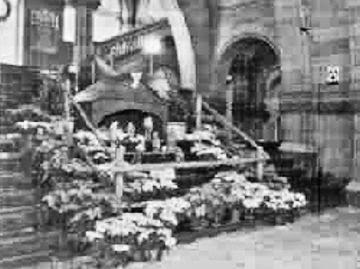
This is the main distinction between the various cases involving Christmas displays. In County of Allegheny v. ACLU, 492 U.S. 573 (1989), the Supreme Court even reached opposite conclusions in the same case. There were, however, two separate displays, and the distinctions directed the results. These pictures were printed with the Supreme Court opinion, and they are not good quality when reproduced here. Nonetheless, they may help you understand the general impression that each conveyed.


The first display involved a large crèche displayed prominently on the Grand Staircase in the county building. Although it was surrounded by poinsettias and small evergreens, they tended to highlight the crèche rather than distract from it.

The second display was one block away on city land. The centerpiece was a large Christmas tree flanked by a menorah on one side and a sign on the other that identified the display as a “Salute to Liberty.”

Four justices voted that both the manager scene and the menorah violated the Establishment Clause, and four justices voted that neither did. Justice Blackman was the swing vote that split the decision.

According to Blackman, the first display violated the Establishment Clause because the crèche is clearly a religious symbol, with the Nativity being a crucial part of the Christian message. For him, the context made it clear that the county was endorsing that message.

He reached a different conclusion for the second display. He dismissed the Christmas tree as a secularized representation of Christmas but had a harder time with the menorah. Even so, he felt that the menorah had taken on some secular implications as well. The combination of these two symbols with the “Salute to Liberty” theme swayed him to vote that the city display was constitutional.

Today the courts seem to agree that even a manger scene is acceptable if it is provided by private individuals or organizations and is part of a larger display. In other words, religious speech is acceptable on government property if it is allowed rather than mandated and if all religions (and atheists) are given equal treatment. This is true in schools as well as in the public square.

Next month we will discuss the government’s ability to restrict your religious speech.

__________

Kathryn Page Camp is a licensed attorney and full-time writer. Her most recent book, Writers in Wonderland: Keeping Your Words Legal (KP/PK Publishing 2013), is a Kirkus’ Indie Books of the Month Selection. Kathryn is also the author of In God We Trust: How the Supreme Court’s First Amendment Decisions Affect Organized Religion (FaithWalk Publishing 2006) and numerous articles. You can learn more about Kathryn at www.kathrynpagecamp.com.